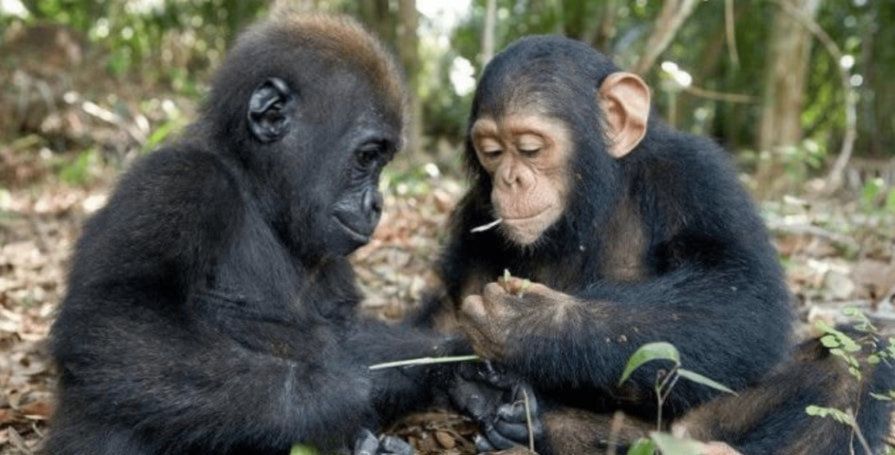

Differences and Similarities Between Gorillas and Chimpanzees
Differences and Similarities Between Gorillas and Chimpanzees
Gorillas and chimpanzees are two of the most fascinating primates in the world. They both belong to the great ape family, sharing close genetic ties with humans, yet they differ in physical features, behavior, social structure, and habitats. Understanding these similarities and differences is crucial for wildlife enthusiasts and researchers alike.
Physical Differences
Gorillas are the largest primates on Earth. Adult male gorillas, known as silverbacks, can weigh between 140 to 200 kilograms, while females weigh around 70 to 90 kilograms. They have broad chests, muscular arms, and a robust build adapted for strength rather than speed. Gorillas primarily move using knuckle-walking and are largely terrestrial, spending most of their lives on the ground.
Chimpanzees, on the other hand, are smaller and more agile. Adult males weigh between 40 to 70 kilograms, and females about 30 to 50 kilograms. Their limbs are proportionally longer for climbing and swinging through trees. Chimpanzees are more arboreal than gorillas, though they also travel on the ground. Their movements are faster, and they are known for their agility and dexterity.
Behavioral Differences
Gorillas are generally peaceful and calm. Silverbacks lead their family groups and are responsible for decision-making, protection, and resolving conflicts. They are primarily herbivores, feeding on leaves, stems, fruits, and occasionally bark. Gorillas are less vocal than chimpanzees, using grunts, roars, and chest-beating to communicate.
Chimpanzees are highly social and display complex behaviors. They are omnivorous, eating fruits, leaves, insects, and sometimes hunting small mammals. Chimpanzees are more aggressive and territorial than gorillas, often engaging in group conflicts or displays to establish dominance. They are highly intelligent, using tools like sticks to extract termites or stones to crack nuts, showcasing problem-solving skills.
Social Structure
Gorilla groups are smaller, usually consisting of one dominant silverback, multiple females, and their offspring. The social structure is stable, with strong family bonds and limited movement between groups.
Chimpanzees live in larger, more fluid communities called “fission-fusion” societies. Groups may split and merge depending on food availability and social interactions. Female chimpanzees often leave their birth groups, while males stay to maintain hierarchy and alliances. This dynamic social structure allows for intricate relationships, grooming behaviors, and cooperative hunting.
Habitat and Distribution
Gorillas are found in central African forests. Mountain gorillas inhabit the Virunga Volcanoes and Bwindi Impenetrable Forest, while lowland gorillas live in dense rainforests of Congo, Gabon, and Cameroon. Gorillas require large territories with abundant vegetation to sustain their primarily herbivorous diet.
Chimpanzees are more widespread across Africa, inhabiting forests, woodlands, and savanna-forest mosaics. They are found in Uganda, Rwanda, Democratic Republic of Congo, and West African countries. Chimpanzees are adaptable and can survive in a wider range of habitats compared to gorillas.
Similarities Between Gorillas and Chimpanzees
Despite their differences, gorillas and chimpanzees share several traits:
- Both are great apes and share over 98% of their DNA with humans.
- They are highly intelligent, capable of problem-solving, learning, and communication through gestures and vocalizations.
- Both species live in social groups with complex hierarchies.
- They face similar threats, including habitat loss, poaching, and diseases.
- Conservation efforts are critical for their survival, with national parks and sanctuaries providing protection and research opportunities.
Conclusion
Gorillas and chimpanzees are remarkable primates with unique adaptations, behaviors, and social systems. While gorillas exhibit calm strength and close-knit family structures, chimpanzees display agility, intelligence, and dynamic social interactions. Both species highlight the incredible diversity and intelligence of great apes, offering unforgettable wildlife experiences for travelers.
For wildlife enthusiasts looking to observe these great apes in their natural habitats, Gecko Safaris Africa offers expertly guided gorilla and chimpanzee trekking tours in Uganda and Rwanda. Secure your adventure today and witness the wonders of Africa’s primates safely and responsibly.