
Visiting Colonial Architectural Buildings in Kampala
Visiting Colonial Architectural Buildings in Kampala
 Kampala is a modern city filled with traffic, skyscrapers, and new developments. Yet, hidden within its bustling streets are buildings that date back to the colonial period. These structures reflect a mix of European styles and Ugandan cultural influence. Visiting them is like walking into a living museum, where architecture tells stories of Uganda’s past.
Key Colonial Architectural Buildings in Kampala
-
The Uganda National Museum
Built during the 1940s, the museum is one of the city’s most important colonial-era structures. Its design blends modernist lines with colonial simplicity. Beyond its walls lies Uganda’s cultural heritage, from archaeology to ethnography.
Best For: History lovers and researchers.
Tip: Take a guided tour to fully understand the exhibits.
Idea: Pair the visit with nearby Makerere University, another colonial institution.
-
Makerere University Main Building
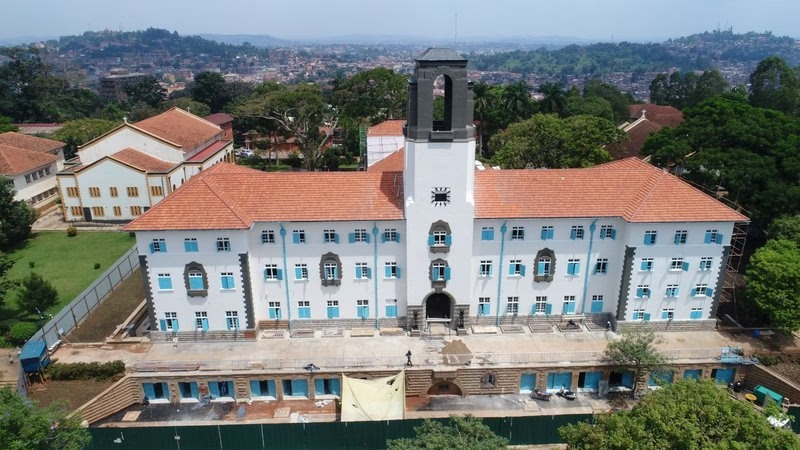
Often called the “Ivory Tower,” Makerere’s main building dates back to the 1940s. Its colonial architecture features tall columns, symmetrical wings, and stone walls. This landmark symbolizes higher learning in East Africa.
Best For: Architecture enthusiasts and academic visitors.
Tip: Explore the campus gardens for photography.
Idea: Visit during graduation season to witness its lively spirit.
-
Namirembe Cathedral (St. Paul’s)
Constructed in 1919, Namirembe Cathedral sits on one of Kampala’s hills. The red-brick design and arched windows reflect early 20th-century missionary architecture. It is the oldest cathedral in Uganda and still hosts Anglican services.
Best For: Spiritual travelers and culture explorers.
Tip: Go at sunset for panoramic city views.
Idea: Attend a Sunday choir service to experience its vibrant music.
-
Rubaga Cathedral (St. Mary’s)
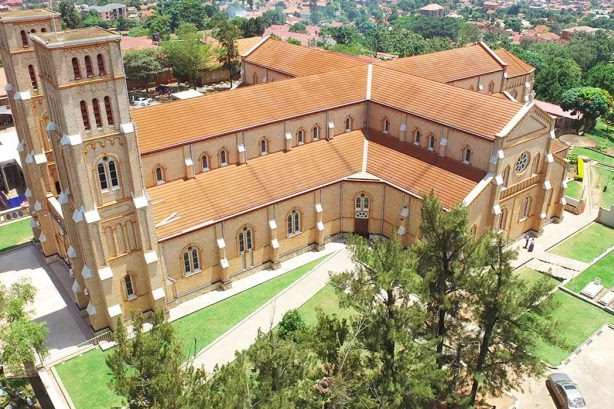
Built in 1925, this Catholic cathedral is another gem of colonial design. With twin towers, stained-glass windows, and a hilltop location, it dominates the city skyline.
Best For: Photographers and faith-based travelers.
Tip: Dress modestly when visiting inside.
Idea: Combine the tour with Rubaga Hill walks.
-
The Parliament of Uganda
Originally constructed under British colonial rule, the Parliament building stands as a symbol of governance. Its design reflects 1950s European institutional architecture, marked by grand halls and wide staircases.
Best For: Political history enthusiasts.
Tip: Arrange permission if you want a guided interior tour.
Idea: Visit on weekdays when parliamentary sessions are active.
Why These Buildings Matter
Colonial architecture in Kampala is more than just stone and mortar. It represents a period of transition for Uganda — from pre-independence to modern statehood. Visiting them gives travelers a deeper understanding of history, faith, education, and governance.
Conclusion
Kampala is not only about its lively markets and modern malls. It is also a city with history written in its buildings. From cathedrals on the hills to grand government halls, colonial architecture adds depth to the city’s identity. A visit to these sites is a step back in time, and a chance to see how Uganda’s past still shapes its present.