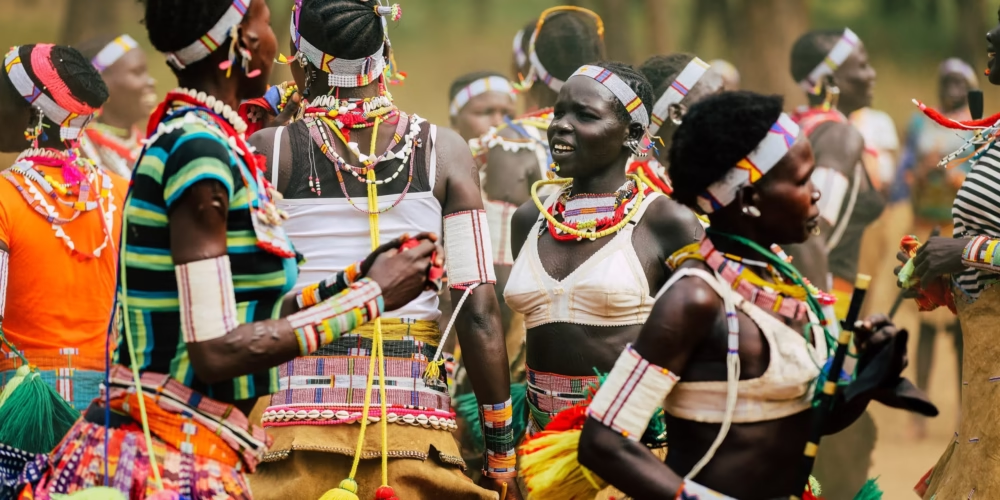

Things to Know Before Visiting South Sudan
Things to Know Before Visiting South Sudan
Visiting South Sudan. South Sudan is one of Africa’s last frontiers for cultural and wilderness exploration. With over 60 ethnic groups, vast savannahs, remote national parks, and few tourists, it offers unfiltered adventure. However, the country is not a typical tourist destination—you must plan carefully, travel smart, and stay informed.

-
Visa and Entry Requirements
You need a South Sudan e-visa, which you can apply for online via the official portal. Processing typically takes 3–7 business days. You must upload a passport photo, yellow fever certificate, and hotel or tour booking details.
Tip: Apply at least two weeks in advance and carry printed documents.
-
Security and Safety
South Sudan has pockets of insecurity, especially in rural areas. However, Juba and some tourism zones are safe when visited with licensed operators. Avoid independent travel. Always check government travel advisories before departure.
Travel smart:
- Register with your embassy
- Travel with a local guide or fixer
- Avoid night movement
- Follow regional curfews and instructions from authorities
-
Health and Vaccinations
Carry a yellow fever vaccination certificate—it’s mandatory. Also, consider vaccines for typhoid, hepatitis A and B, cholera, and meningitis. Malaria is present, so pack mosquito repellents and use prophylactics (e.g., Malarone or Doxycycline).
Pack a personal medical kit, as pharmacies may be poorly stocked in rural zones.
-
Currency and Payments
The official currency is the South Sudanese Pound (SSP), but many places prefer USD cash. Credit cards are rarely accepted. ATMs are unreliable outside Juba.
Bring crisp USD notes (preferably $50 and $100 bills) and keep them safe. Expect to pay in cash for hotels, transport, meals, and permits.
-
Accommodation Standards
Hotels in Juba range from basic lodges to mid-range and high-security hotels. Outside the capital, accommodation includes mobile camps, guesthouses, and sometimes village homestays. Do not expect luxury—think practical, safe, and clean.
-
Connectivity and SIM Cards
The internet is slow but available in Juba. Buy a local SIM card (MTN or Zain) at the airport or city kiosks. A passport is required for registration. In remote areas, expect no signal.
Offline maps and printed itineraries are essential for backup.
-
Dress Code and Cultural Etiquette
South Sudanese people dress conservatively. Wear modest clothing, especially in rural and tribal areas. Long sleeves and trousers are recommended for both sun protection and respect.
Always ask before taking photos, particularly of people, religious sites, or military buildings.
-
Transportation and Road Travel
There’s limited public transport. You’ll need a 4×4 vehicle, ideally with a driver-guide. Roads can be rough, muddy, or impassable during the rainy season (April–October). Fuel stations are rare outside cities.
Flying saves time, especially for trips to Boma, Kapoeta, or Bandingilo.
-
Weather and Best Time to Visit
The dry season, from November to March, is the best time to visit. Roads are passable, and tribal camps like the Mundari are most active. The wet season brings flooding and inaccessibility in many areas.
-
Photography and Drones
Photography is allowed but sensitive. Avoid military, government, or airport photos. Always ask locals for permission.
Drones require a special permit from the Ministry of Information. Flying one without approval may lead to arrest.
-
Language and Communication
English is the official language, but many people speak Arabic or local tribal dialects. Learn a few local greetings—they go a long way.
Hiring a translator or local fixer improves communication and access in tribal areas.
-
Tour Operators and Fixers
Work with experienced operators based in Juba. They handle permits, logistics, guides, and interpreters. Tribal tours, national park trips, and remote explorations are only safe with organized support.
Plan Your South Sudan Visit
South Sudan is a destination for intrepid travelers who seek human connection, untouched cultures, and dramatic landscapes. With the right preparation and local support, your visit will be one of the most unique travel experiences in Africa.