
Top Photography Tips for Stunning Photos
Top Photography Tips for Stunning Photos
Whether you are capturing wildlife in Uganda, street life in Kampala, or sunsets over Lake Bunyonyi, great photography tells a story. It freezes emotion, movement, and memory in a single frame. But stunning photos don’t happen by chance — they take timing, technique, and creativity.
-
Master the Light
Lighting can make or break a photo. The best light comes during golden hour — shortly after sunrise or just before sunset. It’s soft, warm, and flattering.
Avoid shooting in harsh midday sun. If you must, look for shade or use diffused light to soften shadows.
-
Focus on Composition
Think about what you want your viewer to see first. Use the rule of thirds: divide your frame into nine equal parts and place your subject at one of the intersecting points.
Leading lines, symmetry, and framing with natural elements like windows or branches also create strong visual interest.
-
Get Closer
Don’t be afraid to move in. Zoom with your feet, not your lens. Close-up shots reveal texture, emotion, and detail — especially when photographing people or animals.
Keep eye-level shots for portraits to create connection. For wildlife, shoot from a low angle to emphasize scale.
-
Keep the Background Simple
Busy or cluttered backgrounds distract from your subject. Use shallow depth of field (with a wide aperture like f/2.8 or f/4) to blur the background and make your subject pop.
If possible, reposition or reframe your shot to remove distractions.
-
Understand Your Camera
Whether you use a smartphone, DSLR, or mirrorless camera, know its settings. Learn how to adjust:
- ISO for light sensitivity
- Shutter speed for motion blur or freeze
- Aperture for depth of field
- White balance for accurate colors
Manual control gives you more creative power than auto mode.
-
Be Patient and Ready
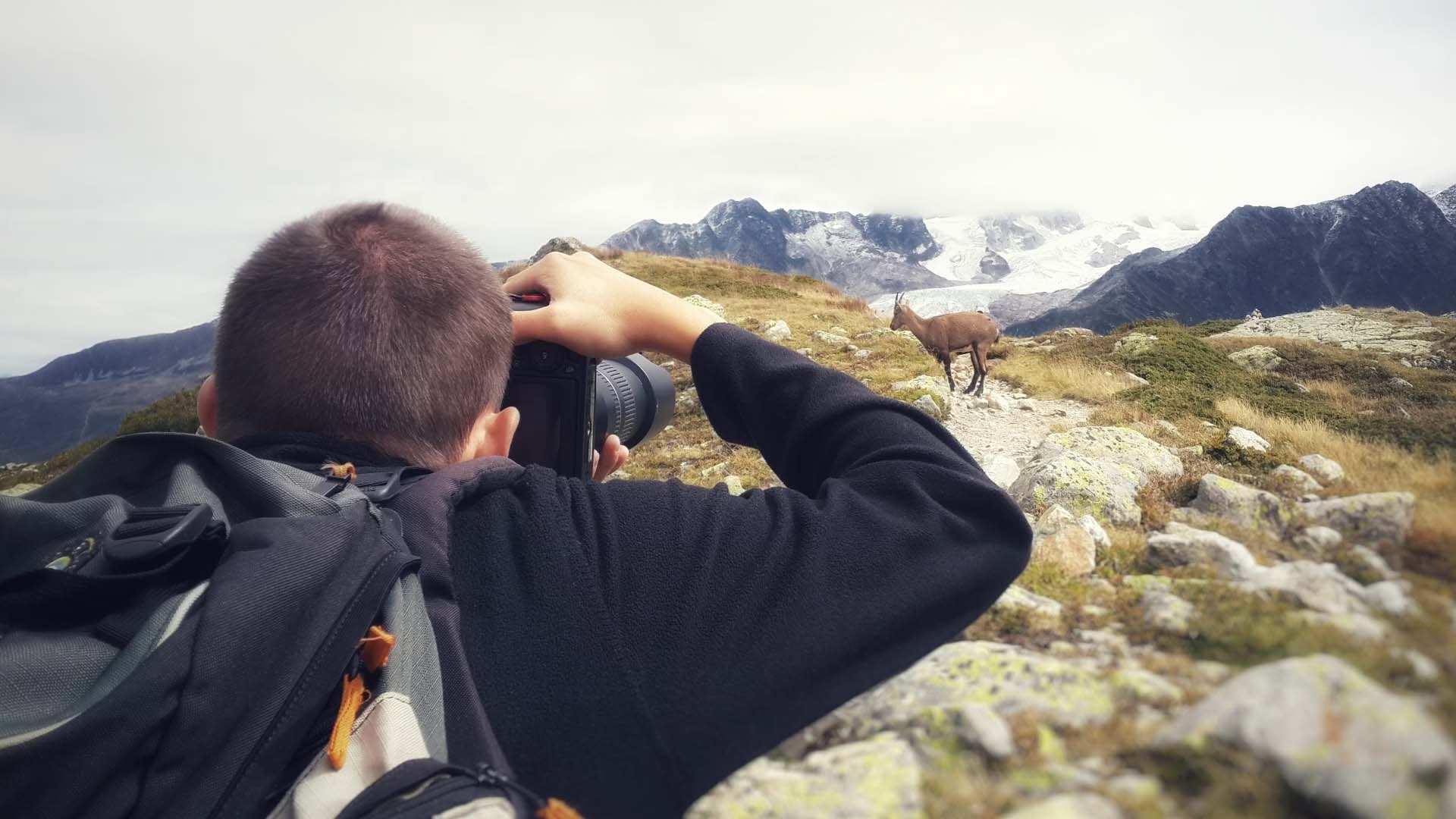
Great shots often require waiting. Watch your subject. Predict movement. For wildlife or action scenes, use burst mode to capture multiple frames in seconds.
Always carry extra batteries and memory cards — you don’t want to miss a moment because your gear gave out.
-
Tell a Story
Every photo should say something. Is it showing joy, mystery, struggle, or wonder? Use composition, color, and subject placement to build a mood or narrative.
Try to capture the why of a moment, not just the what.
-
Edit Thoughtfully
Post-processing enhances what your camera captured. Adjust brightness, contrast, sharpness, and color for clarity and mood.
Use tools like Lightroom or Snapseed, but don’t over-edit. Keep the image natural and real.
-
Respect Your Subject
Whether you photograph people, animals, or sacred spaces, always ask for permission when needed. Don’t chase wildlife or disturb the environment for a shot.
Ethical photography protects both your subject and your credibility.
-
Practice Often
The more you shoot, the better you become. Try new styles — landscapes, portraits, night shots, macro. Study what works and what doesn’t. Share your work, ask for feedback, and keep growing.
Plan Your Shots
Before your next trip, prepare:
- Clean your gear
- Charge your batteries
- Research locations and best times for light
- Learn about your subjects
- Set a goal for what stories you want to tell
The difference between a good photo and a stunning one lies in intention and attention.