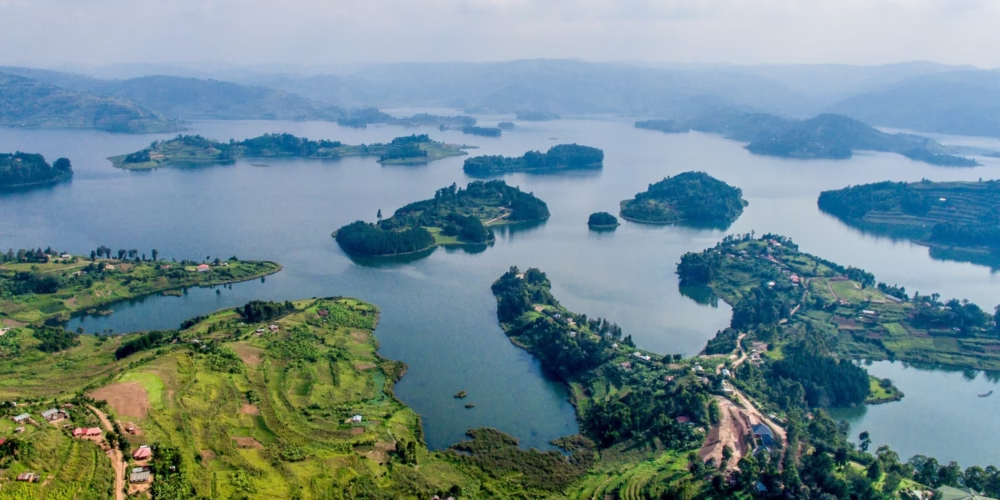

History of Lake Bunyonyi.
History of Lake Bunyonyi: Legends, Survival, and Culture in Uganda’s Highlands
Lake Bunyonyi, meaning “Place of Little Birds” in the local Rukiga language, is one of Uganda’s most beautiful and mysterious lakes. Located in the country’s southwestern highlands near Kabale, this lake is more than a scenic stop — it holds stories of culture, survival, exile, and change.
At an elevation of about 1,962 meters above sea level, and reaching depths estimated at 40 to over 900 meters, Lake Bunyonyi is not only among the deepest lakes in Africa but also one of the most culturally rich. Its calm waters and misty islands are silent witnesses to centuries of tradition and history.
Formation and Physical Origins
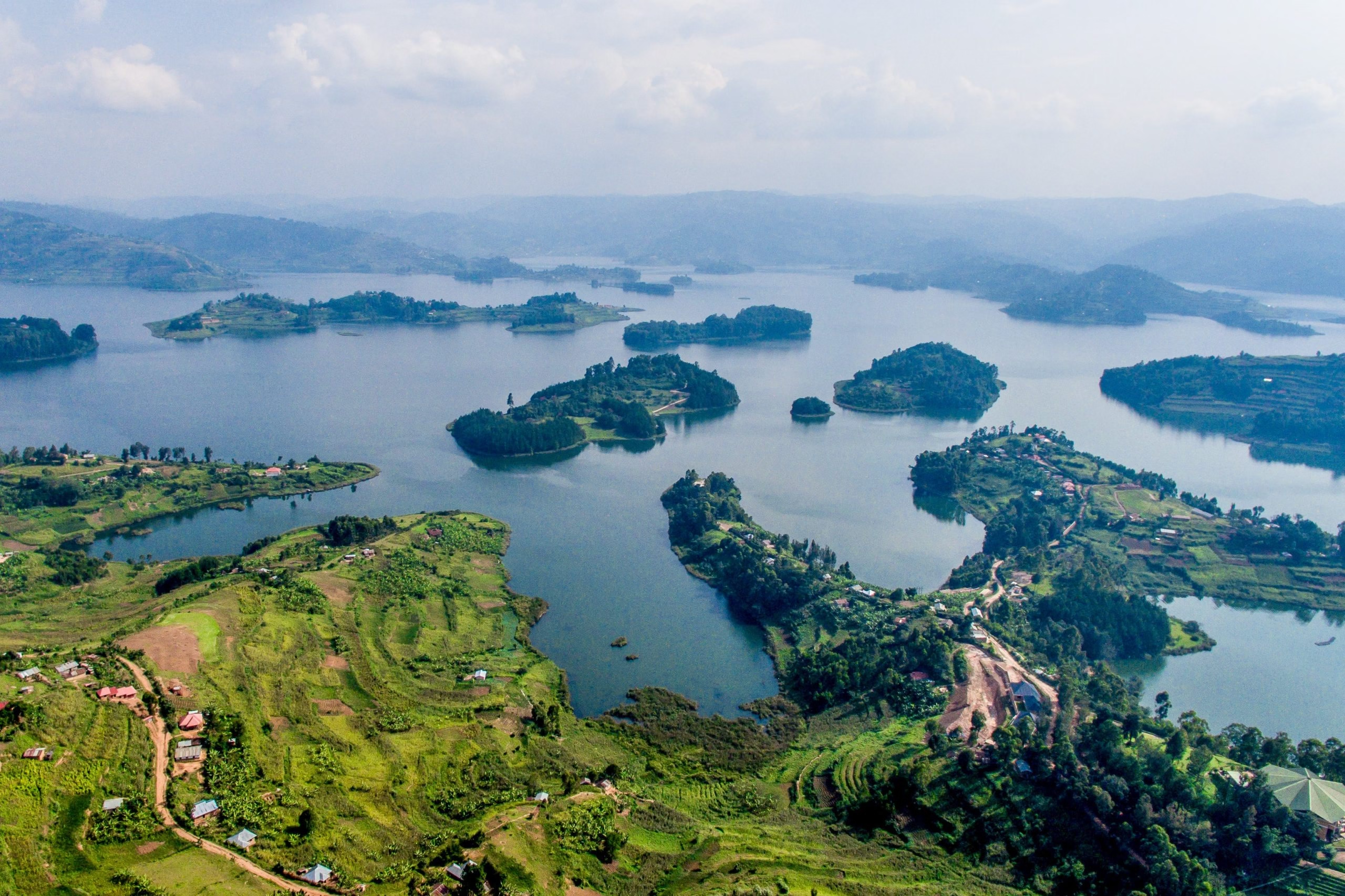
Lake Bunyonyi formed thousands of years ago, likely after a volcanic eruption in the Virunga region blocked a valley, creating a natural dam. The blocked water formed the lake that now snakes through hills and valleys.
Today, it stretches roughly 25 kilometers long and 7 kilometers wide, surrounded by steep terraced hills rising over 2,200 meters. The region’s volcanic soils support agriculture, and the lake’s freshwater system supports fish, birds, and humans alike.
The Islands of Lake Bunyonyi
Lake Bunyonyi contains 29 small islands, each with its own name, history, and cultural role. Some are inhabited, others used for farming, and a few hold deeper meaning.
-
Akampene (Punishment Island)
Perhaps the lake’s most famous island, Akampene carries a tragic past. In traditional Bakiga culture, unmarried girls who became pregnant were abandoned here to die as punishment and warning. With no food or shelter, many perished. A few survived when fishermen or poor men rescued them, sometimes choosing to marry them as wives.
This practice ended in the early 20th century with changing laws and Christian influence, but the island remains a haunting reminder of cultural norms and the value of women in traditional society.
-
Bwama Island
In the 1920s, a British missionary named Dr. Leonard Sharp started a leper colony on Bwama Island. He brought patients there to live in isolation and receive care. He also built a school and hospital on the island. Today, local communities still live on Bwama, and the facilities now serve educational purposes.
-
Bushara, Bucuranuka, and More
Other islands, like Bushara, are now eco-tourism centers with lodges and camps. Bucuranuka, which means “the upside-down island”, carries a myth. It’s said that the island once hosted people who refused to share local brew with an old woman. She warned them and left — the island then flipped and killed everyone on it. This legend is still told to children and visitors today.
Colonial Influence and Missionary Work
During the colonial period, Lake Bunyonyi remained remote but not untouched. British administrators and Christian missionaries reached the area in the early 20th century. They built churches, schools, and hospitals and worked closely with the Bakiga people, the region’s dominant ethnic group.
Missionaries like Dr. Sharp not only cared for leprosy patients but also introduced new crops, education systems, and sanitation practices. The lake began to appear in British travel records and missionary reports as a place of healing and natural beauty.
Post-Independence and Tourism Growth
After Uganda gained independence in 1962, Lake Bunyonyi remained largely rural and undeveloped. However, its beauty slowly began to attract more local and international travelers.
In recent years, the lake has gained popularity as a stop for tourists visiting Bwindi Impenetrable National Park for gorilla trekking. It’s seen as a place to rest, reflect, and recover after jungle hikes. The calm water, scenic views, and cultural stories have turned it into one of the top eco-tourism destinations in the country.
Lodges, canoe tours, and community projects now thrive around its shores — but the lake has kept its quiet soul.
Cultural Significance Today
For the Bakiga, Lake Bunyonyi remains a place of pride. It features in songs, proverbs, and celebrations. Locals still farm its surrounding hills and paddle traditional dugout canoes from island to island.
Visitors often meet elders who share oral histories passed down for generations. These stories give meaning to the landscape — making every hill and island part of a living heritage.
The lake also symbolizes resilience. From its volcanic birth to its dark past and present beauty, Lake Bunyonyi has always been a place where life changes, restarts, and thrives again.
Plan Your Safari
A visit to Lake Bunyonyi is more than a relaxing getaway. It’s a journey through time, memory, and meaning. As you glide across its waters or hike its terraced hills, you feel the weight of history and the peace of nature. Add it to your Uganda itinerary—whether after gorilla trekking, as a cultural stop, or simply as a quiet escape.
Let the silence of the lake speak to you. Let its history deepen your travel experience.