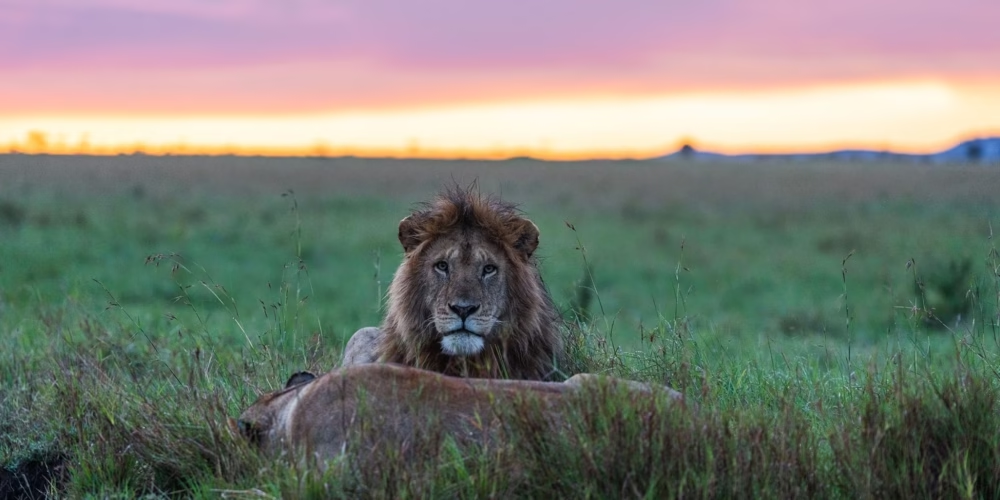

Lion Weight by Age, Gender, and Region
Lion Weight by Age, Gender, and Region.
Lion Weight by Age. Lions are among the most powerful and admired animals in the wild, but their strength isn’t just in their roar—it’s in their size. One of the key physical traits that define a lion’s dominance is its weight, which varies depending on its age, gender, and region. Understanding these weight differences helps us appreciate lion biology, interpret pride dynamics, and even track their health in conservation programs.
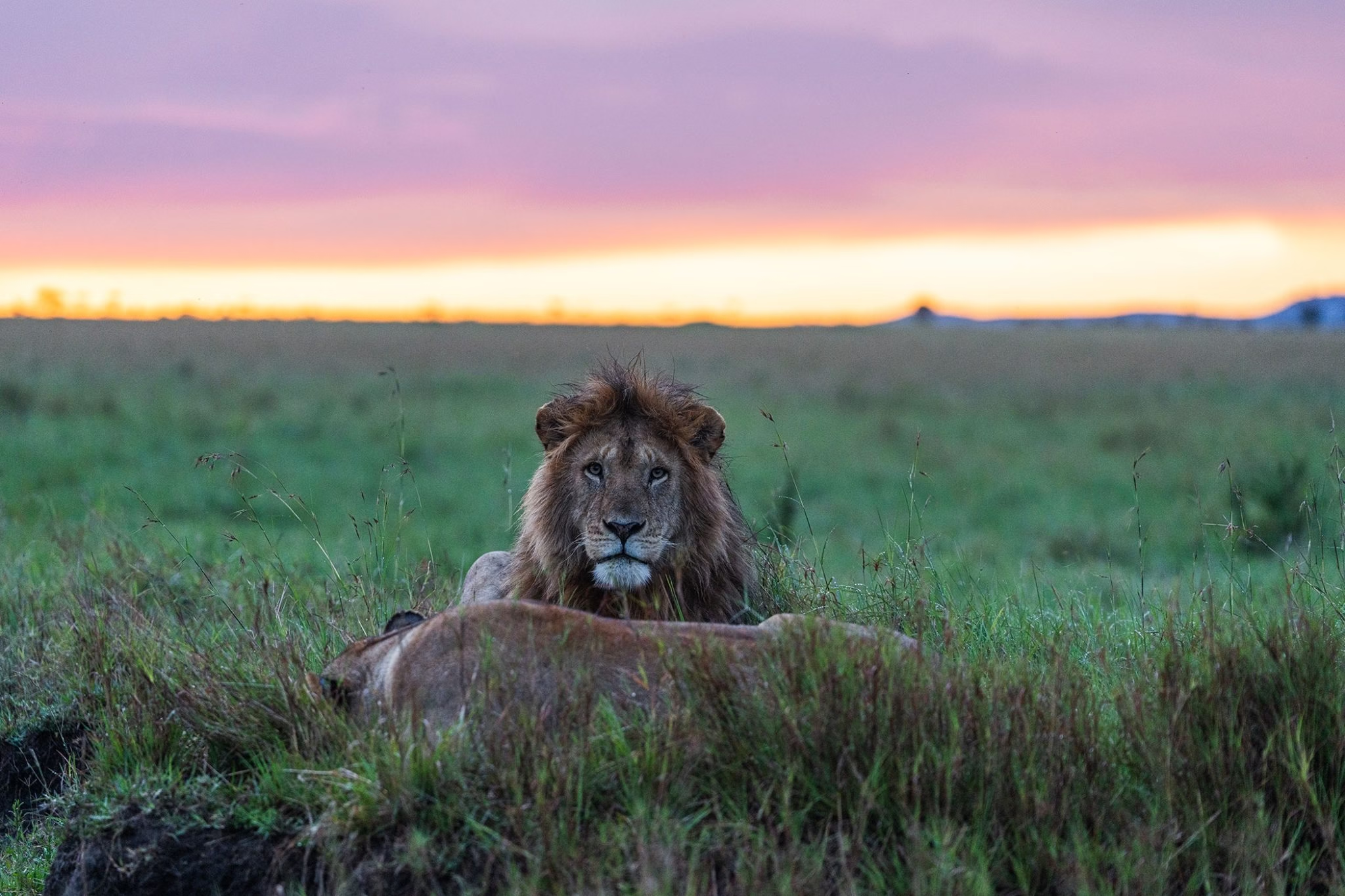
This article breaks down lion weight in detail—from tiny cubs to dominant males—across various ecosystems in Africa and Asia.
Lion Weight by Age: Growth from Cub to King
Lions grow rapidly in their first few years, transitioning from helpless cubs to apex predators. Below is a stage-by-stage overview of lion weight through development.
| Age | Male Weight | Female Weight | Notes |
| Newborn (0–1 week) | 1.5–2 kg (3.3–4.4 lbs) | 1.3–1.8 kg (2.9–4.0 lbs) | Blind and vulnerable; completely dependent on mother. |
| 3 months | 10–15 kg (22–33 lbs) | 9–13 kg (20–29 lbs) | Begin teething; still rely on mother’s milk and scraps. |
| 6 months | 30–40 kg (66–88 lbs) | 25–35 kg (55–77 lbs) | Start learning to hunt; increasingly mobile. |
| 1 year | 60–90 kg (132–198 lbs) | 50–80 kg (110–176 lbs) | Juvenile stage; developing strength and independence. |
| 2 years | 130–160 kg (287–352 lbs) | 100–130 kg (220–287 lbs) | Nearly adult-sized; males may leave pride. |
| 4–6 years (prime) | 180–225 kg (400–500 lbs) | 120–160 kg (265–353 lbs) | Full maturity; peak hunting and mating strength. |
| 10+ years | May decline due to muscle loss | Slight decline or stable | Weight decreases with age, injury, or reduced activity. |
Male lions grow significantly larger than females due to sexual dimorphism. Females are more agile and do most of the hunting, while males are built for defense and territorial combat.
Lion Weight by Gender
The average male lion weighs between 150 and 225 kilograms (330–500 lbs), with exceptional individuals exceeding 270 kg (600 lbs) in regions like southern Africa. By contrast, female lions are smaller and leaner, weighing between 110 and 165 kilograms (240–365 lbs).
| Gender | Average Weight Range | Maximum Weight |
| Male | 150–225 kg (330–500 lbs) | Up to 270 kg (600 lbs) |
| Female | 110–165 kg (240–365 lbs) | Up to 180 kg (400 lbs) |
Males gain additional mass not just from muscle but also from the mane, which adds bulk and insulation but also makes them more visible and vulnerable in hot environments.
Lion Weight by Region: Where Size Varies
Lion populations differ not just in genetics and behavior but also in size. Prey abundance, climate, and competition influence how large lions grow in different parts of their range.
| Region | Male Weight | Female Weight | Remarks |
| East Africa (Serengeti, Masai Mara) | 150–190 kg (330–420 lbs) | 110–140 kg (240–310 lbs) | Well-fed due to high prey density during migration seasons. |
| Southern Africa (Kruger, Kalahari, Okavango) | 180–225 kg (400–500+ lbs) | 130–160 kg (287–353 lbs) | Lions here are often the heaviest due to abundant megafauna prey. |
| West Africa | 150–180 kg (330–400 lbs) | 100–130 kg (220–287 lbs) | Populations are isolated and tend to be slightly smaller. |
| Central Africa | 150–190 kg (330–420 lbs) | 110–140 kg (240–310 lbs) | Fragmented habitats result in moderate size variations. |
| Asiatic Lions (India) | 160–190 kg (350–420 lbs) | 100–120 kg (220–265 lbs) | Slightly smaller due to limited prey and genetic bottlenecks. |
Lions in Botswana’s Okavango Delta and Zimbabwe’s Hwange National Park are often noted for their exceptional size, particularly males that feed on large prey like buffalo, giraffes, and even hippos.
Why Lion Weight Matters
Weight plays a critical role in lion survival, especially in males. Heavier lions are more likely to:
- Win pride takeovers and mate with females.
- Defend territory from rival males and intruding predators like hyenas.
- Survive longer during dry seasons when prey is scarce, thanks to fat reserves.
However, heavier lions also need more food and water, and may overheat in dry, hot regions—making weight a double-edged sword in terms of adaptation.
How Scientists Measure Lion Weight
Researchers and conservationists use a combination of techniques:
- Darting and sedation: Lions are safely tranquilized to obtain accurate weight.
- Photogrammetry: Using camera traps and measurements from images.
- Track size correlation: Using paw prints and stride length to estimate size.
These metrics help monitor lion health, assess age, and track growth in captive breeding or rewilding programs.
Plan Your Safari: Where to See Lions of All Sizes
- Serengeti National Park (Tanzania): High-density lion prides and dramatic hunts.
- Masai Mara (Kenya): Best for cub sightings and lion-on-lion interactions.
- Kruger National Park (South Africa): Home to large-bodied lion coalitions and luxury safari options.
- Ruaha National Park (Tanzania): Less tourist traffic, large lion populations.
- Gir Forest (India): Unique opportunity to see endangered Asiatic lions in their natural habitat.
Visit during the dry season (June–October) for the best chance to see lions near waterholes, hunting or cooling off.
Conservation Relevance: Monitoring Lion Size and Health
Tracking lion weight helps conservationists:
- Detect signs of malnutrition or injury.
- Measure success in reintroduction or relocation projects.
- Understand ecological pressures such as prey depletion or human encroachment.
Protecting lions means protecting ecosystems. Large, healthy lions are indicators of a thriving habitat, which benefits countless other species.
Final Thought
From small cubs weighing just a few kilos to massive males tipping the scales at over 250 kg, lions exhibit impressive growth and size variation across age, sex, and region. These differences aren’t just numbers—they reflect survival strategies shaped by habitat, competition, and evolutionary history.
Understanding lion weight deepens our appreciation for the species and supports efforts to protect them across Africa and Asia.