
Are Lions Endangered?
Are Lions Endangered?
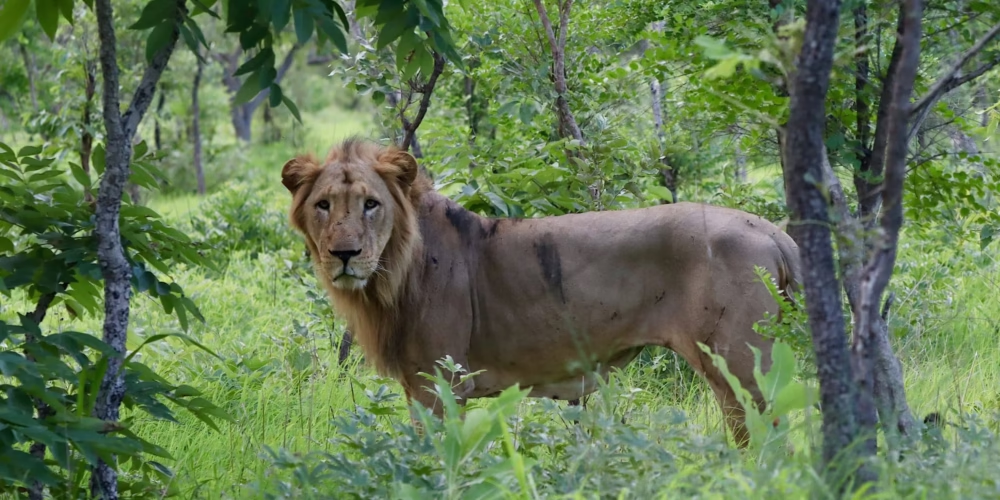
Yes, lions are considered vulnerable to extinction, and some subspecies are classified as critically endangered. According to the International Union for Conservation of Nature (IUCN), lions (Panthera leo) are listed as Vulnerable on the Red List of Threatened Species. This means they are not yet critically endangered overall—but they are at high risk of extinction in the wild if current trends continue.
The Asiatic lion (Panthera leo persica), found only in India’s Gir Forest, is listed as Endangered, with a population of around 600 individuals. Some small African lion populations, such as those in West and Central Africa, are also nearing critical thresholds.
Global Lion Population: How Many Are Left?
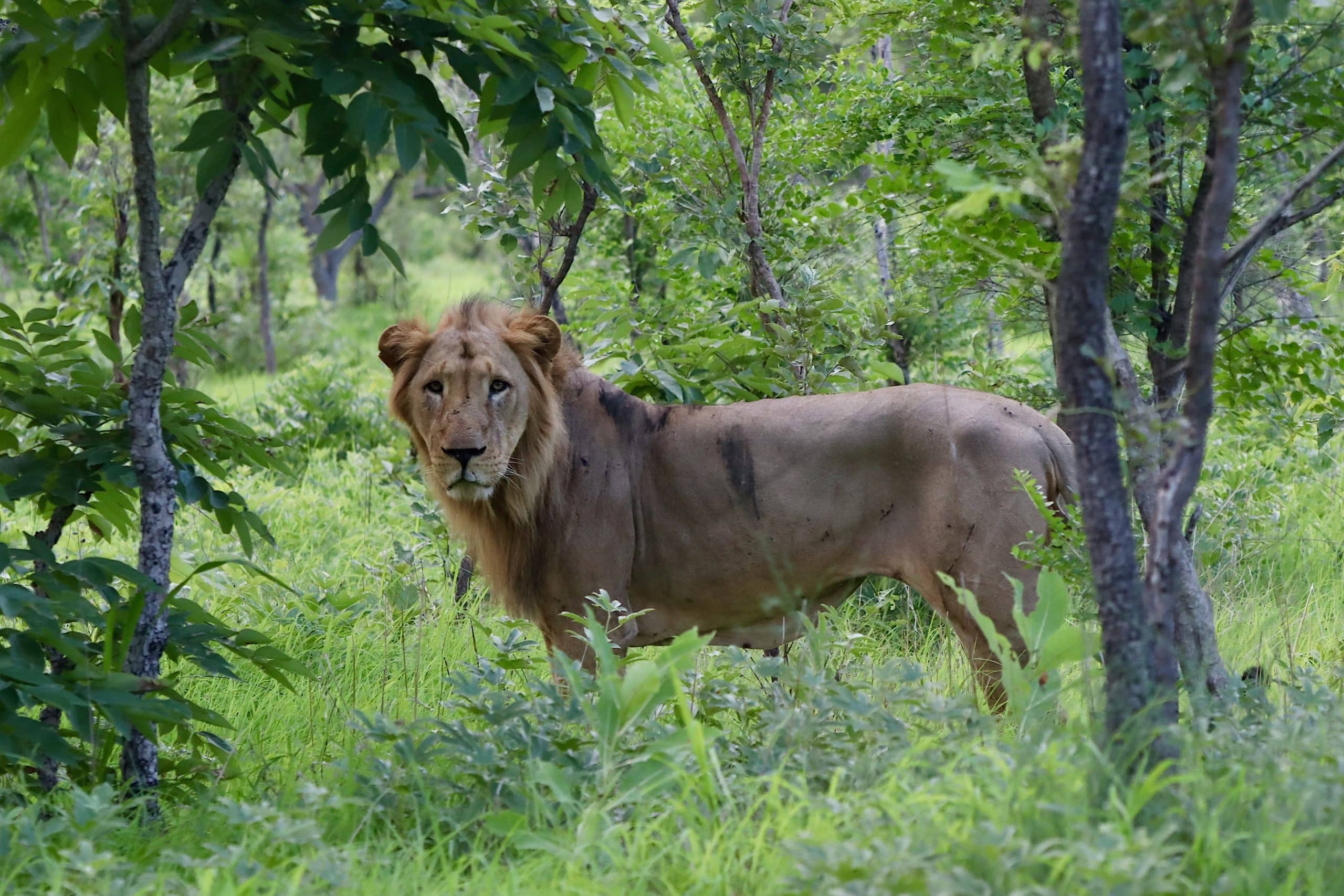
A century ago, lions roamed across Africa, southern Europe, and Asia. Today, wild lion numbers have dropped by over 90%.
- Current global estimate: Approximately 20,000 to 25,000 wild lions remain.
- Historic estimate: Over 200,000 lions roamed Africa in the early 1900s.
- Range reduction: Lions now inhabit only 8% of their historical range.
Most wild lions today are found in East and Southern Africa, with Tanzania alone hosting nearly 14,500 individuals—over 40% of the global wild population.
Main Threats to Lion Survival
The decline of lions isn’t due to a single cause—it’s a result of overlapping, human-driven pressures:
-
Habitat Loss
As Africa’s human population grows, lion habitats are fragmented by farms, roads, and settlements. Reduced range means fewer prey animals and higher risk of human conflict.
-
Human-Wildlife Conflict
When lions attack livestock, local communities often retaliate by poisoning or spearing them. These conflicts are especially common near park boundaries or in unprotected corridors.
-
Poaching and Illegal Wildlife Trade
Lions are increasingly targeted for body parts—teeth, claws, bones—for use in traditional medicine or jewelry, particularly in Asia.
-
Trophy Hunting
Though controversial, regulated trophy hunting is legal in some African countries. When poorly managed, it removes key male lions, disrupts pride structures, and can affect local populations.
-
Loss of Prey
Bushmeat poaching—illegal hunting of antelope, zebras, and other herbivores—reduces food sources for lions, pushing them closer to human areas.
Are All Lions Equally at Risk?
No. The risk of extinction varies by region and subspecies:
- Asiatic Lion (India): Endangered; about 600 remain in Gir Forest. Protected but vulnerable to disease or natural disasters due to limited range.
- West African Lions: Critically endangered; small, isolated populations with fewer than 400 mature individuals.
- Southern and East African Lions: Populations are larger and more stable, but still declining in unprotected areas.
Protected reserves like the Serengeti (Tanzania) and Okavango Delta (Botswana) offer relative safety for lions, but populations outside parks are highly vulnerable.
What Conservation Efforts Are in Place?
Several organizations and countries are working to stabilize and restore lion numbers:
- Anti-poaching patrols: Reduce illegal hunting of lions and their prey.
- Lion Guardians programs: Train locals to monitor and protect lions using traditional knowledge.
- Community conservation: Incentivize communities to protect lions through tourism revenue sharing.
- Protected area expansion: Creating wildlife corridors and reducing habitat fragmentation.
- Campaigns against canned lion hunting and trade in lion parts.
Conservation groups such as Panthera, Lion Recovery Fund, and African Parks are central to these efforts.
How You Can Help Protect Lions
Whether you’re a traveler, educator, or wildlife lover, here’s how to support lion conservation:
- Visit ethical safari destinations that contribute to local conservation and employ community members.
- Support organizations working on lion protection and habitat conservation.
- Avoid buying products made from lion parts or supporting exploitative activities like cub petting.
- Share awareness on social media or educational platforms to promote lion-friendly practices.
- Choose eco-certified tour operators and lodges that follow sustainable wildlife guidelines.
Final Thought
Lions may still be kings of the wild, but their rule is under threat. While they are not yet extinct, their numbers continue to shrink, and many populations are endangered or critically endangered. Protecting lions means protecting ecosystems, livelihoods, and one of the most revered symbols of nature. With stronger conservation efforts and public support, there’s still time to change the trajectory—and ensure future generations can witness lions in the wild, not just in stories or cages.