
Alligator vs Crocodile: What’s the Difference?
Alligator vs Crocodile: What’s the Difference?
Alligators and crocodiles are two of the most iconic reptiles on Earth—ancient, powerful, and often confused for one another. Though they share a prehistoric ancestry and appear similar to the untrained eye, these two creatures differ significantly in appearance, behavior, habitat, and temperament. Understanding these differences not only helps in identification but also deepens our appreciation for their unique roles in nature.
Taxonomy and Species
Alligators belong to the family Alligatoridae, with only two species remaining today: the American alligator, found in the southeastern United States, and the critically endangered Chinese alligator, native to the Yangtze River basin. Crocodiles, on the other hand, belong to the family Crocodylidae and include around 15 species distributed across Africa, Asia, Australia, and the Americas.
Snout Shape and Teeth Visibility
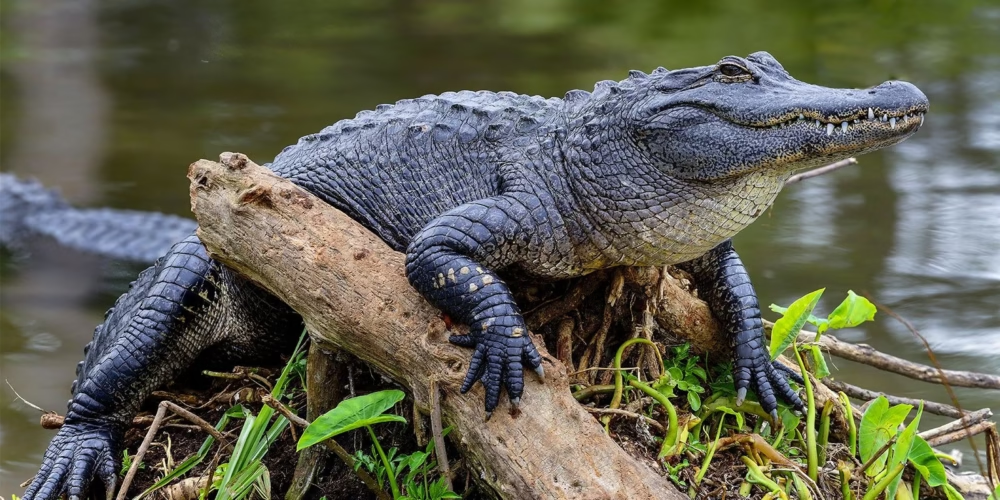
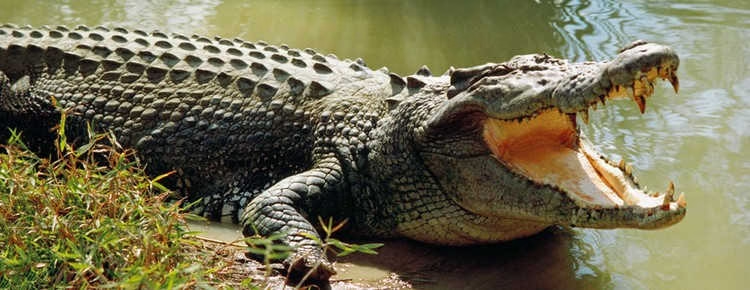
One of the most noticeable differences lies in the snout. Alligators have a broad, U-shaped snout that appears wider and more rounded, which helps them crush prey like turtles. Crocodiles have a longer, V-shaped snout that is more pointed—better suited for gripping and catching fish. Their jaw structure also differs. When an alligator closes its mouth, only the upper teeth are visible. In contrast, crocodiles show both upper and lower teeth when their jaws are shut, especially the prominent fourth tooth on the lower jaw, which fits into a notch on the upper jaw.
Color and Skin Texture
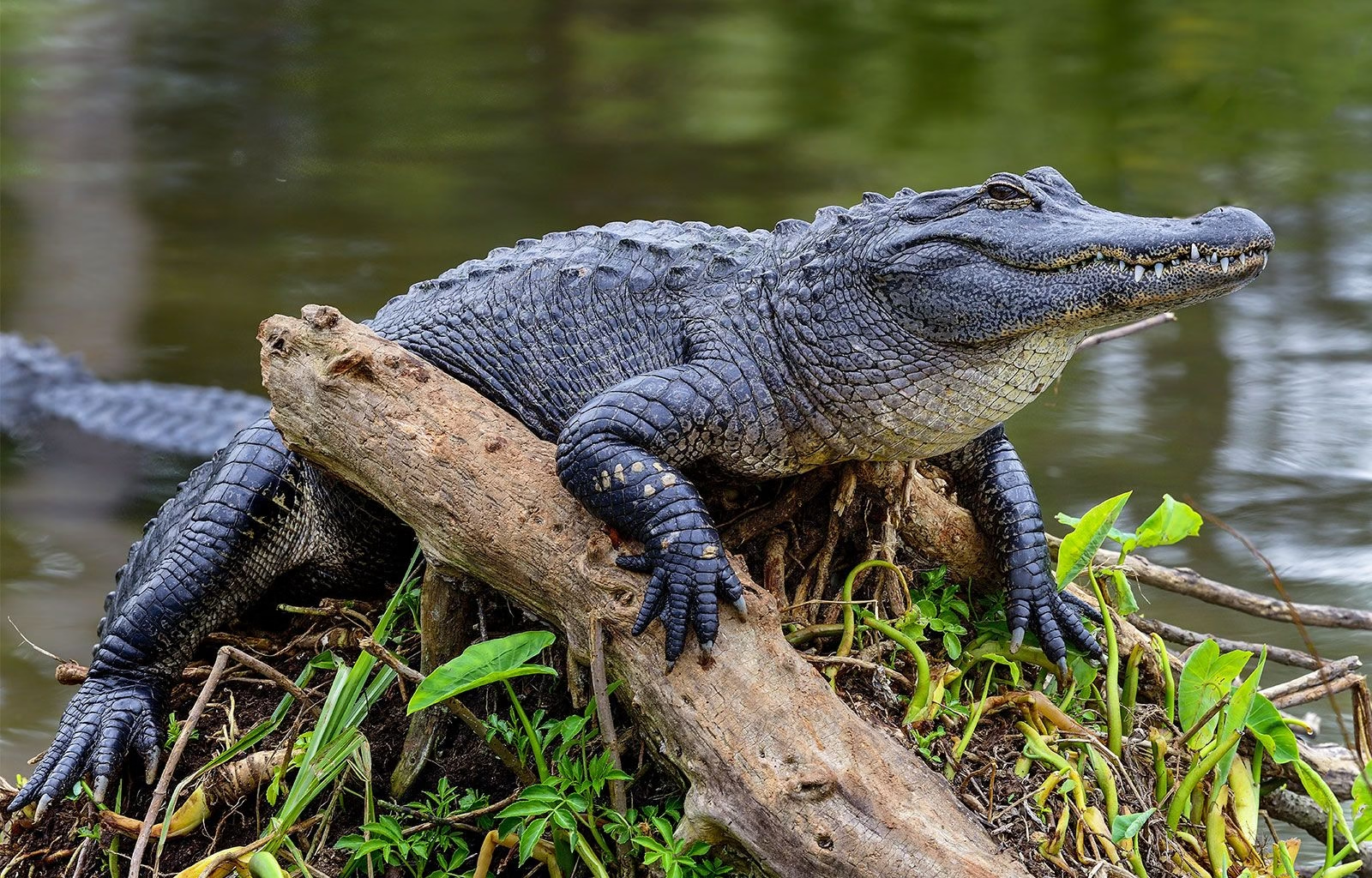
Alligators typically have darker skin, ranging from grayish-black to almost charcoal, and their coloring is more uniform. Crocodiles are generally lighter, with olive green, tan, or brownish skin marked by a rougher, more uneven pattern. These color differences help each species camouflage within their respective environments.
Habitat and Range
Alligators are freshwater animals and prefer slow-moving rivers, swamps, lakes, and marshes. They are mostly found in the southeastern United States, especially in Florida and Louisiana. The Chinese alligator is restricted to a very small region in eastern China. Crocodiles, however, are more versatile and can survive in both freshwater and saltwater. This is largely due to special glands in their tongues that excrete excess salt. As a result, crocodiles inhabit rivers, deltas, mangroves, and even coastal oceans in Africa, Southeast Asia, Australia, and the Americas.
Behavior and Temperament
Temperament is another key difference. Alligators are generally less aggressive toward humans and are more likely to retreat when approached. They tend to be territorial but not confrontational unless provoked. Crocodiles are far more aggressive and unpredictable. Species like the saltwater crocodile and Nile crocodile are responsible for hundreds of attacks on humans each year. Their powerful bite force, territorial nature, and stealth make them one of the most dangerous predators in their habitats.
Size and Strength
Crocodiles generally grow larger than alligators. The average adult male alligator grows between 3 and 4.5 meters (10 to 15 feet) in length and can weigh up to 450 kilograms (1,000 pounds). Crocodiles, particularly saltwater crocodiles, can reach lengths of over 6 meters (20 feet) and weigh more than 1,000 kilograms (2,200 pounds). This size advantage contributes to their dominant position in aquatic food chains.
Speed and Mobility
Despite their bulky bodies, both alligators and crocodiles are fast swimmers, reaching speeds up to 25 to 30 km/h (15 to 20 mph) in water. On land, they can run in short bursts at speeds up to 18 km/h (11 mph), though they tire quickly. Their mobility helps them ambush prey but makes them less dangerous over longer distances.
Alligator vs Crocodile: Quick Comparison Table
| Feature | Alligator | Crocodile |
| Snout Shape | Broad and U-shaped | Narrow and V-shaped |
| Teeth Visibility | Upper teeth visible only | Upper and lower teeth visible |
| Skin Color | Dark gray to black | Olive green or brown |
| Water Preference | Freshwater | Fresh and saltwater |
| Aggression Level | Less aggressive | More aggressive |
| Size Range | Up to 4.5 meters (15 ft) | Up to 6 meters (20 ft) |
| Geographic Range | U.S., China | Africa, Asia, Americas, Australia |
Where to See Them
Alligators are easily spotted in the wild throughout Florida’s Everglades National Park, Louisiana’s bayous, and parts of Georgia and South Carolina. The Chinese alligator, though critically endangered, can be seen in protected reserves in Anhui Province. Crocodiles can be found in more diverse regions—saltwater crocodiles are seen in Kakadu National Park in Australia, Nile crocodiles in Uganda’s Murchison Falls and the Zambezi River, and American crocodiles in coastal areas of Central America and southern Florida.
Plan your safari.
Alligators and crocodiles may look similar at a glance, but their differences are easy to spot once you know what to look for—from the shape of their snout to their behavior and habitat. While both play crucial roles in their ecosystems, crocodiles tend to be more widespread, more aggressive, and physically larger. Whether you are spotting them on safari or visiting protected wetlands, understanding these reptiles enhances your wildlife experience—and keeps you safe.