
Are Hyenas Dogs?
Are Hyenas Dogs? The Truth About Hyena Classification and Behavior
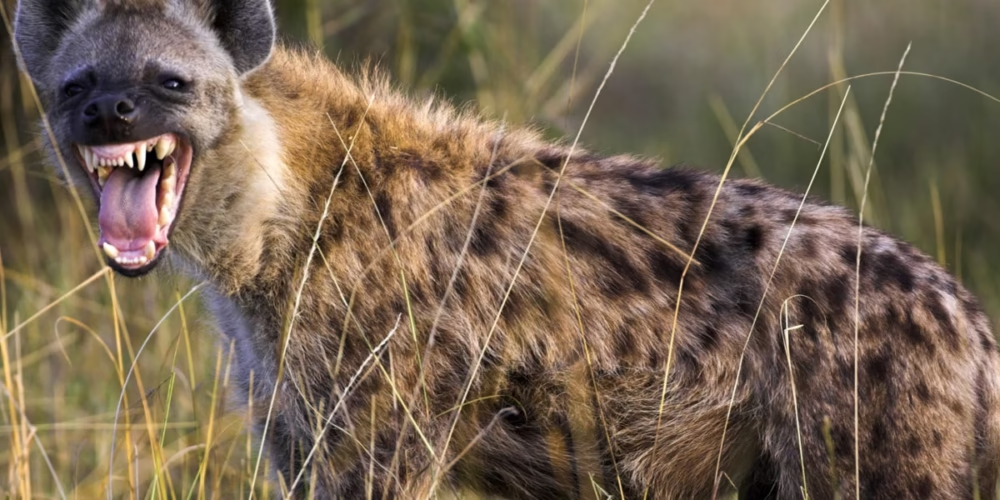
When you first see a hyena in the African savannah, its dog-like appearance might trick you into assuming it’s just another wild canine. But are hyenas really dogs? The answer is more complex than it seems. In this blog post, we will explore the taxonomy, behavior, and unique adaptations of hyenas to clarify the confusion.
What Are Hyenas?
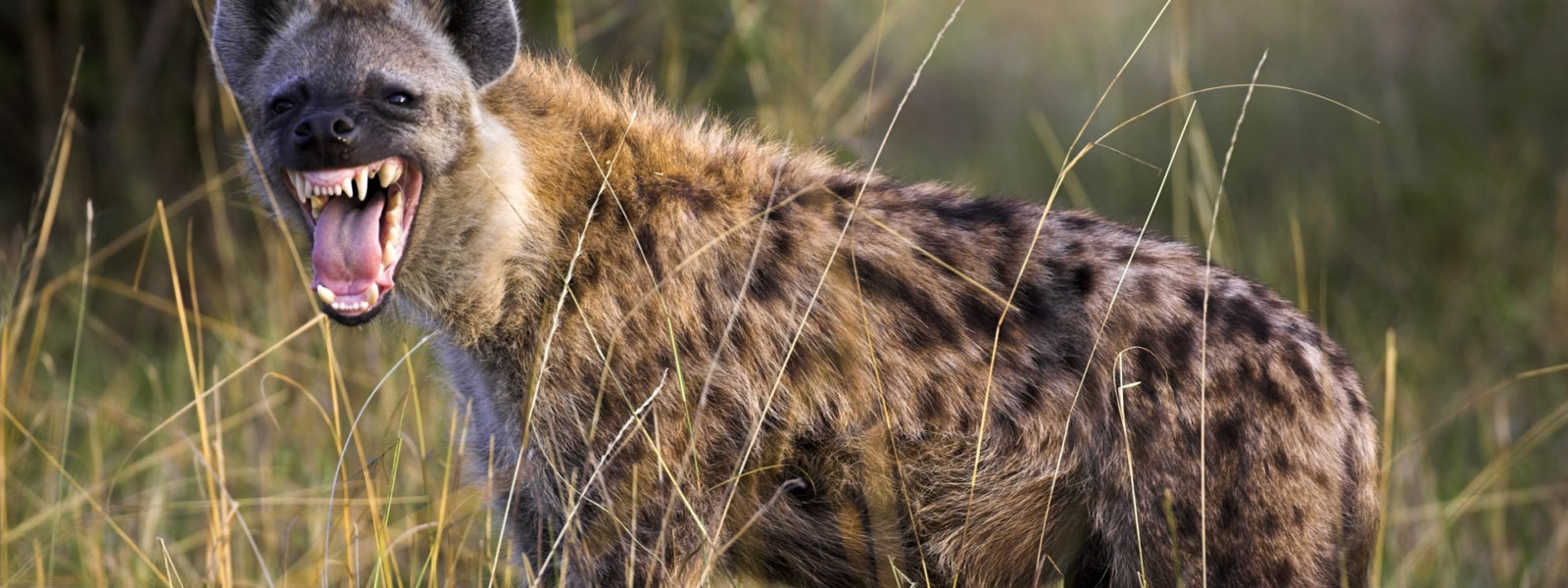
Hyenas are carnivorous mammals native to Africa and parts of Asia. Although they resemble dogs in shape and behavior, they belong to a completely different biological family. Hyenas are members of the family Hyaenidae, which is distinct from Canidae, the family that includes dogs, wolves, and foxes.
There are four recognized species of hyenas:
- Spotted hyena (Crocuta crocuta)
- Striped hyena (Hyaena hyaena)
- Brown hyena (Parahyaena brunnea)
- Aardwolf (Proteles cristata) – an insectivorous species
Hyenas vs. Dogs: Key Differences
-
Taxonomy
Hyenas are more closely related to cats (Feliformia) than to dogs (Caniformia). Both hyenas and cats fall under the order Carnivora, but they diverge significantly in evolutionary lineage.
-
Physical Traits
While hyenas and dogs share some superficial traits such as long legs, pointed ears, and powerful jaws, hyenas have several features that set them apart:
- A sloping back due to longer front limbs
- Non-retractable claws
- A distinctive gait known as pacing
- Extremely strong jaws adapted for bone crushing
-
Social Structure
Spotted hyenas live in large, matriarchal clans where females are dominant over males. Their social complexity rivals that of primates. In contrast, wild dogs such as African painted wolves follow a more egalitarian pack structure with monogamous breeding pairs.
-
Communication
Hyenas communicate through a variety of vocalizations, including whoops, grunts, and the infamous “laugh” which signals social status, excitement, or submission. Dogs bark, howl, and whine—but their vocal patterns differ in tone, purpose, and complexity.
Why the Confusion?
The confusion likely stems from:
- Their physical resemblance to dogs
- Their scavenging habits, which overlap with both dogs and vultures
- Outdated pop culture references and myths portraying hyenas as canine-like tricksters or villains
Unique Hyena Characteristics
- Bone-crushing bite: Spotted hyenas have one of the strongest bite forces of any land mammal.
- Digestive powerhouses: They can consume and digest entire carcasses, including bones and hooves.
- Pseudopenis in females: Female spotted hyenas have an enlarged clitoris that resembles a male penis—used in social interactions and even birth, a rare phenomenon in the animal kingdom.
- Highly intelligent: Studies show hyenas outperform some primates in problem-solving and teamwork tasks.
Final Verdict: Are Hyenas Dogs?
No, hyenas are not dogs. Despite their dog-like looks and behaviors, hyenas are more closely related to cats and mongooses. They belong to a unique family that has adapted over millions of years to thrive in some of the harshest ecosystems on Earth.
Understanding hyenas for what they are—highly intelligent, socially complex, and ecologically vital carnivores—helps break down myths and fosters a greater appreciation for these misunderstood animals.
Plan Your Safari to Spot These Animals
If you are fascinated by hyenas and want to witness their behavior in the wild, East and Southern Africa offer incredible safari opportunities. The spotted hyena, the most common and social species, is regularly seen in:
- Serengeti National Park (Tanzania) – Known for its large hyena clans and active nighttime sightings.
- Maasai Mara (Kenya) – Ideal for observing hyenas during the Great Migration.
- Kruger National Park (South Africa) – Offers both day and night drives with frequent hyena sightings.
- Hwange National Park (Zimbabwe) – Home to brown hyenas and excellent predator-prey interactions.
- Etosha National Park (Namibia) – Known for its elusive brown hyenas and saltpan landscapes.
Book a guided safari that includes early morning and late evening game drives, as hyenas are primarily nocturnal. Night drives provide the best chance to see their complex social behaviors, hunting tactics, and vocal communications.
Whether you’re tracking their whoops across the plains or watching a clan devour a wildebeest carcass, seeing hyenas in the wild is an unforgettable experience.