
Benefits of Bwindi Impenetrable National Park to Uganda
Benefits of Bwindi Impenetrable National Park to Uganda
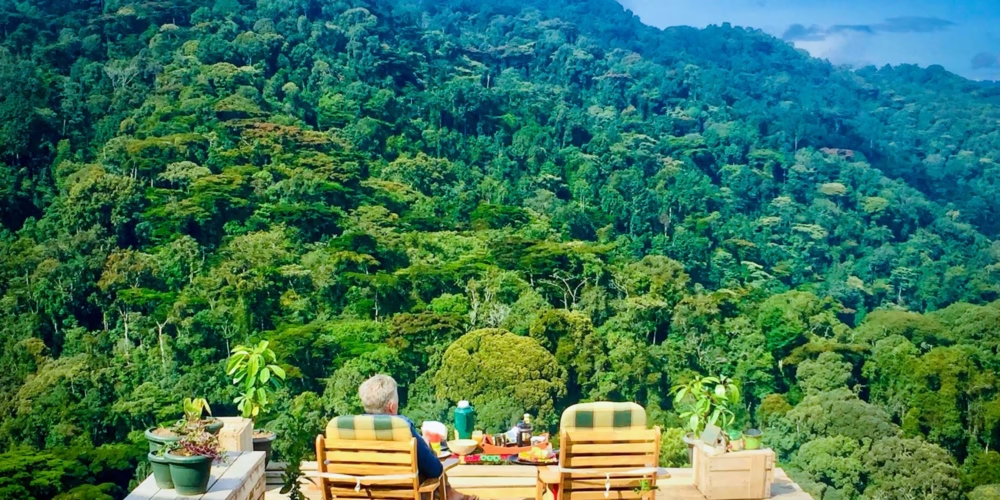
Bwindi conservation. Bwindi Impenetrable National Park is one of Uganda’s most important natural assets. Located in the southwest near the Congo border, Bwindi covers over 320 square kilometers of dense tropical forest. It’s best known as home to nearly half of the world’s mountain gorilla population.
But the park offers more than just wildlife. It plays a vital role in Uganda’s economy, environment, culture, and global reputation.

-
Gorilla Tourism Revenue
Gorilla trekking is Uganda’s top tourism activity, and Bwindi is the main destination. Thousands of travelers visit each year for the chance to see mountain gorillas in the wild.
Each gorilla permit costs $800 per person (as of 2025). This generates significant revenue for the government and private tour operators. The money supports park management, conservation, and national development.
Tourists also spend on hotels, guides, transport, and crafts—boosting the wider economy.
-
Employment and Local Income
Bwindi supports jobs for thousands of Ugandans. Local people work as rangers, porters, lodge staff, tour guides, and community project leaders. Women’s groups and cooperatives sell handmade crafts and offer cultural experiences.
Villages around Bwindi benefit from gorilla tourism through revenue-sharing schemes. A portion of each permit fee goes to local development—funding schools, clinics, roads, and clean water.
-
Conservation and Biodiversity Protection
Bwindi protects more than just gorillas. The forest holds over 120 mammal species, 350 bird species, and 200 tree species. Some are endangered and found nowhere else.
By conserving Bwindi, Uganda safeguards a UNESCO World Heritage Site and one of Africa’s richest ecosystems. This effort protects genetic diversity and balances the environment.
-
Climate Regulation and Water Catchment
Bwindi’s forest acts as a carbon sink, helping fight climate change. The dense vegetation captures carbon dioxide and regulates temperatures.
The park also protects important water sources. Its rivers and streams feed lakes and communities downstream. Healthy forests reduce erosion, improve soil fertility, and maintain rainfall patterns.
-
Cultural Heritage and Education
Indigenous groups like the Batwa lived in Bwindi for generations. Today, community programs help preserve their stories, music, and traditions. Tourists learn about the Batwa during cultural tours, helping keep their heritage alive.
The park also supports research and conservation education. Scientists, students, and visitors learn about primates, forest ecology, and sustainable tourism. These efforts build knowledge and promote global conservation awareness.
-
Global Recognition and Partnerships
Bwindi brings international attention to Uganda. As a UNESCO site and gorilla stronghold, it draws support from NGOs, governments, and universities.
Partnerships with groups like the Dian Fossey Gorilla Fund, WWF, and International Gorilla Conservation Programme (IGCP) bring funding, expertise, and credibility to Uganda’s conservation efforts.
Protecting Bwindi, Empowering Uganda
Bwindi Impenetrable National Park is more than a tourist site. It supports wildlife, uplifts communities, and protects Uganda’s natural and cultural wealth. As long as Uganda protects Bwindi, the park will continue to give back—economically, environmentally, and socially.