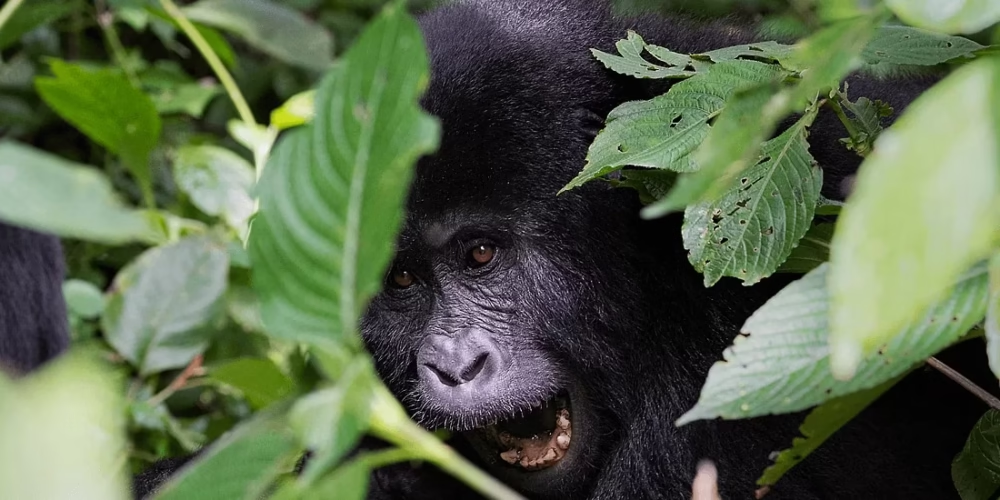

Gorilla Mating and Reproduction
Gorilla Mating and Reproduction
Gorillas, our close primate relatives, exhibit fascinating and complex sexual and reproductive behaviors. Understanding gorilla mating and reproduction not only reveals the intricacies of their social structures but also supports conservation efforts, especially for endangered species like mountain gorillas.

Social Structure and Mating Dynamics
Gorillas live in social groups called troops or bands, typically led by a dominant silverback male. This silverback plays a crucial role in mating, protection, and group coordination. A typical troop may include one silverback, several adult females, and their offspring. In multi-male groups, the dominant silverback monopolizes most mating opportunities, although subordinate males may occasionally mate secretly.
Gorilla Sexual Behavior
Contrary to popular belief, gorilla sex is not purely for reproduction. While not as overtly sexual as bonobos, gorillas do exhibit sociosexual behavior. Mating is usually initiated by the female. She may approach the silverback and present herself by making eye contact, puckering her lips, or positioning her body to signal readiness. If the silverback is receptive, copulation occurs shortly after.
Mating in gorillas is typically short, lasting only a few seconds, though it can occur multiple times during the female’s fertile period. Gorillas do not have a specific mating season—females can conceive year-round.
Female Estrus and Fertility
Female gorillas reach sexual maturity around 8–10 years old. They have a menstrual cycle similar in length to humans—about 28–32 days—but it’s not externally visible (no swelling or coloration like in chimpanzees). Ovulation usually occurs midway through the cycle, and conception is most likely during this fertile window.
Females give birth to one infant after a gestation period of about 8.5 months (approximately 255 days). Twin births are extremely rare.
Reproduction and Parental Investment
After birth, infants weigh around 1.8–2.3 kg (4–5 lbs). Gorilla mothers are the primary caregivers and are intensely nurturing. Infants cling to their mother’s chest for the first few months and ride on her back once they gain enough strength.
Weaning occurs around 3–4 years, although it varies between subspecies. Mothers generally do not conceive during the nursing period due to lactational amenorrhea—a natural birth spacing method triggered by breastfeeding.
Females typically give birth every 4 to 6 years, resulting in low reproductive rates. This slow reproductive cycle makes gorilla populations particularly vulnerable to habitat loss and poaching.
Male Reproduction and Competition
Male gorillas reach sexual maturity around 11–13 years. As they age, they develop the characteristic silverback—the gray saddle of hair on their back—and become capable of leading a troop.
Silverbacks engage in intense competition for dominance. Only the dominant male usually mates freely, though rivalries and female choice sometimes allow other males limited access. When a silverback takes over a new group, infanticide may occur. This brutal behavior brings females back into estrus, allowing the new male to sire his own offspring.
Conservation Implications
Understanding gorilla reproduction is vital for conservation. Given their low birth rate and long interbirth intervals, population recovery is slow even under ideal conditions. Protecting reproductive-age females, minimizing human-wildlife conflict, and supporting captive breeding and habitat conservation are key to sustaining gorilla populations.
Research also helps inform gorilla habituation programs, enabling ecotourism to support conservation financially without disrupting natural behaviors.
Plan Your Gorilla Trek
For wildlife enthusiasts, observing gorillas in the wild—especially mother-infant interactions—offers a deeply moving experience. Trekking through Uganda’s Bwindi Impenetrable Forest, Rwanda’s Volcanoes National Park, or Congo’s Virunga National Park allows travelers to witness the gentler side of these great apes, reinforcing the importance of protecting their fragile existence.