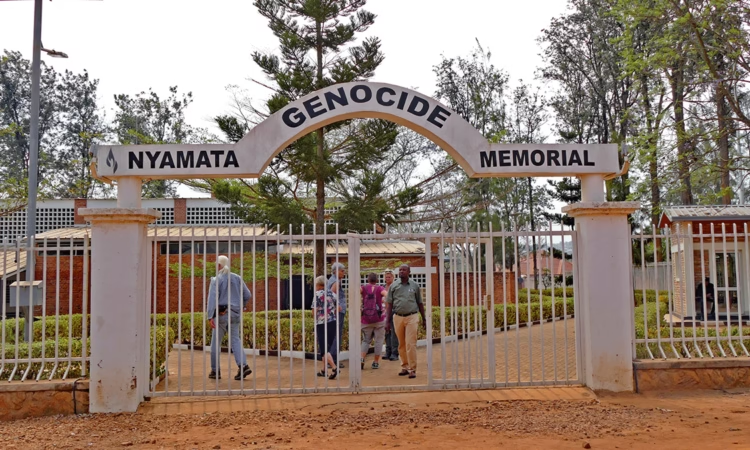

Nyamata Genocide Memorial
Nyamata Genocide Memorial: A Church Turned Symbol of Rwanda’s Pain and Resilience
In the quiet town of Nyamata, 35 kilometers south of Kigali, a modest Catholic church has become a powerful symbol of one of the darkest moments in Rwanda’s history. The Nyamata Genocide Memorial preserves the memory of more than 45,000 people who were massacred during the 1994 genocide against the Tutsi.
What was once a place of worship became a site of unimaginable violence. Today, the church stands as a silent witness to that atrocity—a stark reminder of how hate, when left unchecked, can turn sacred places into killing fields.
The Genocide: Context and Tragedy
In April 1994, following the assassination of President Juvénal Habyarimana, Rwanda descended into chaos. Within hours, extremist Hutu militias launched a meticulously organized campaign targeting Tutsi civilians and moderate Hutus. Churches, schools, and government buildings turned into slaughterhouses.
At Nyamata Church, thousands of Tutsis gathered, believing that the sanctuary would shield them from the violence. Instead, attackers used grenades, rifles, and machetes to kill everyone inside. In total, over 45,000 people lost their lives in and around the church compound over the course of the genocide.
What the Memorial Reveals
The church has been preserved almost exactly as it was found after the genocide. Inside, blood-stained clothing still covers the pews. Bullet holes and grenade damage scar the walls and ceiling. The altar remains as it was—draped in cloth soaked in blood. The atmosphere inside is hauntingly quiet.
Beneath the church lies a crypt holding thousands of skulls and bones—evidence of the horror that took place. Outside, mass graves mark the final resting place of entire families. The memorial doesn’t attempt to soften the story; it presents the truth with raw, unfiltered emotion.
Also displayed are personal artifacts: identity cards, shoes, rosaries, and clothing—all recovered from the victims. These items humanize the statistics. They remind every visitor that this was not just a massacre. It was the erasure of individuals, of names, of lives.
Educational Purpose and Legacy
The Nyamata Genocide Memorial is more than a monument. It’s a place of learning, remembrance, and confrontation. Guided tours, often led by survivors or trained historians, offer context on how Rwanda reached such a breaking point and how it continues to rebuild.
Visitors learn not only about the genocide itself but also about the ideology that fueled it. They come face-to-face with the consequences of discrimination, propaganda, and indifference. The memorial plays a key role in Rwanda’s reconciliation process by keeping memory alive and promoting education against future atrocities.
Practical Visitor Information
- Location: Nyamata town, Bugesera District, Rwanda
- Distance from Kigali: About 35 km (approx. 45-minute drive)
- Opening Hours: Daily, 9:00 AM – 5:00 PM
- Entry Fee: Free of charge (donations are welcomed)
- Guided Tours: Available in English, Kinyarwanda, and French
What to Expect and How to Prepare
A visit to Nyamata is emotionally intense. Prepare yourself mentally and emotionally, especially if you are unfamiliar with the details of the genocide. Many visitors report that the memorial leaves a lasting impact.
Dress respectfully. Photography inside the church is usually restricted, though it may be permitted in designated outdoor areas. Always ask your guide for permission before taking pictures.
Plan for at least 1–2 hours at the site. If time allows, you can also visit the Ntarama Genocide Memorial, just 15 minutes away, for a broader understanding of the massacres in Bugesera District.
Plan Your Visit Thoughtfully
Nyamata is not a tourist attraction. It’s a sacred ground where thousands died. Visiting it requires not only time and logistical planning—but also emotional preparation and respect.
Many tour operators in Kigali include Nyamata as part of genocide memorial circuits. Alternatively, you can hire a private driver or use public transport to Nyamata town, then take a motorcycle taxi to the site.
Before you go, consider reading survivor testimonies or watching documentaries such as Ghosts of Rwanda or Hotel Rwanda. These offer background and deepen the experience of your visit.
Plan Your Visit
If you are in Rwanda, a visit to the Nyamata Genocide Memorial should be part of your itinerary—not for sightseeing, but for understanding. It teaches more than just history. It reveals how quickly hatred can destroy and how a nation can choose peace, unity, and healing.
The lessons of Nyamata are not just for Rwandans. They are universal. The memorial stands as both a warning and a call to defend humanity wherever it’s threatened.