
14 Must-See Historical Landmarks in South Africa
South Africa is a country shaped by ancient civilizations, colonial encounters, and liberation struggles. Its historical landmarks tell powerful stories—from indigenous kingdoms and centuries-old trade routes to apartheid-era prisons and national monuments. Whether you’re a history buff, a curious traveler, or a culture lover, these 14 must-see historical landmarks in South Africa offer insight into the country’s layered past and diverse heritage.
-
Robben Island (Western Cape)
Located just off the coast of Cape Town, Robben Island is South Africa’s most iconic political prison. Nelson Mandela spent 18 of his 27 years here. The island is now a UNESCO World Heritage Site and museum. Guided tours, led by former inmates, provide a gripping look into South Africa’s fight against apartheid.
-
Cradle of Humankind (Gauteng)
This UNESCO site contains the richest hominin fossil finds in the world. Caves like Sterkfontein have yielded remains of early human ancestors, including the famous Mrs. Ples and Little Foot. Interactive exhibits at Maropeng Visitor Centre explore evolution, geology, and early human life.
-
Union Buildings (Pretoria)
The Union Buildings are the official seat of the South African government and the President’s office. Designed by Herbert Baker, they overlook Pretoria and represent national unity. The Nelson Mandela statue on the front lawn symbolizes post-apartheid reconciliation.
-
Voortrekker Monument (Pretoria)
This towering granite structure honors the Afrikaner pioneers who trekked inland during the 1830s. Carved panels depict major battles and settlements, offering insight into Afrikaner history. It’s a key site for understanding the colonial frontier narrative.
-
Castle of Good Hope (Cape Town)
Built by the Dutch East India Company in the 1600s, this is the oldest surviving colonial building in South Africa. The star-shaped fortress served as a military stronghold and administrative center. Today, it hosts exhibitions on Cape Town’s colonial past.
-
District Six Museum (Cape Town)
This museum tells the story of a once-vibrant, multicultural neighborhood destroyed by apartheid-era forced removals. Personal stories, maps, and photographs preserve the memory of the 60,000 residents who were displaced.
-
Isandlwana Battlefield (KwaZulu-Natal)
Here, in 1879, Zulu warriors delivered a shocking defeat to British forces during the Anglo-Zulu War. The site remains a powerful symbol of resistance. Memorials and interpretive centers guide visitors through this pivotal moment in colonial history.
-
Rorke’s Drift (KwaZulu-Natal)
Located near Isandlwana, this mission station saw one of the most famous British defenses during the Zulu War. Despite being heavily outnumbered, British soldiers held off a Zulu attack. The site includes a small museum and preserved buildings.
-
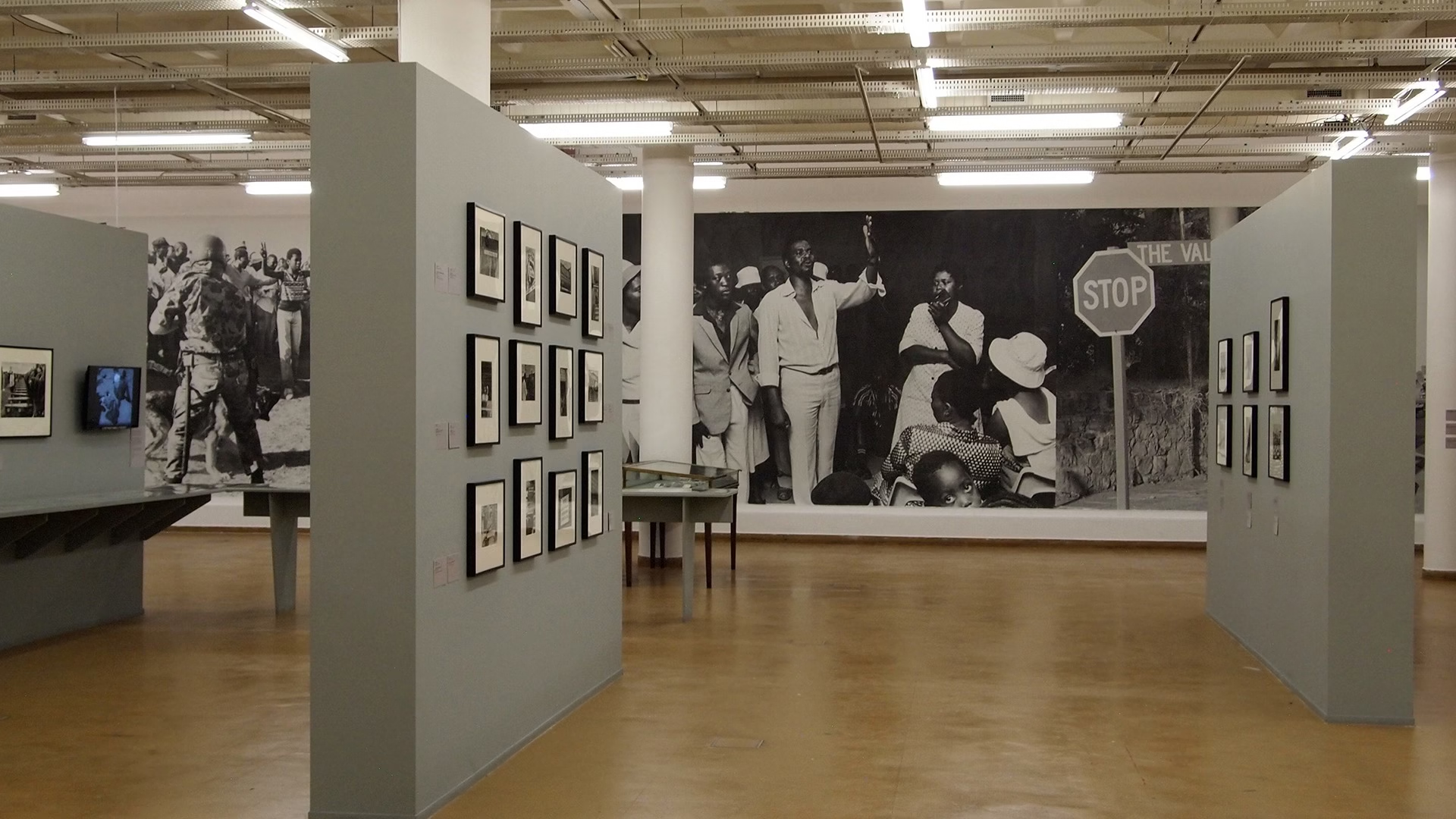
Apartheid Museum (Johannesburg)
This world-class museum documents South Africa’s dark past under apartheid. Exhibits use multimedia, personal stories, and historical documents to show the brutality of racial segregation and the long road to freedom.
-
Freedom Park (Pretoria)
Built as a tribute to South Africa’s liberation heroes and victims of conflict, Freedom Park blends memorial architecture with cultural heritage. It honors diverse struggles—from colonial resistance to apartheid activism—through gardens, sculptures, and names of the fallen.
-
Groot Constantia (Cape Town)
Established in 1685, this is South Africa’s oldest wine estate. The manor house, museum, and cellar tell the story of colonial winemaking, slave labor, and the development of the Western Cape.
-
Kimberley Big Hole and Mine Museum (Northern Cape)
The Big Hole is the result of frantic diamond mining in the late 1800s. Kimberley was the heart of the diamond rush and the rise of companies like De Beers. The museum recreates a mining-era town and provides insight into the industry’s global impact.
-
Mapungubwe Hill (Limpopo)
Mapungubwe was the capital of a wealthy African kingdom that flourished in the 11th–13th centuries. The site reveals early trade with Arabia, skilled gold craftsmanship, and complex society structures. Archaeological finds include the famed golden rhino.
-
Nelson Mandela Capture Site (KwaZulu-Natal)
Near Howick, this site marks the location where Mandela was arrested in 1962. A striking sculpture composed of steel columns forms a portrait of Mandela when viewed from a specific angle. The visitor center offers detailed exhibits on his life and arrest.
Plan Your Historical Journey
South Africa’s history is not just found in books—it lives in its landmarks, streets, and stories. Visiting these historical sites provides a richer, deeper understanding of the nation’s identity and the resilience of its people. Whether you stand in the shadow of ancient ruins or listen to voices echoing from a prison cell, these places offer a journey through time.
Ready to explore South Africa’s legacy?
Start planning your historical tour today and walk in the footsteps of heroes, warriors, and visionaries.