

Nshongi Gorilla Family in Bwindi
Nshongi Gorilla Family in Bwindi: History, Location and Trekking Guide The Nshongi Gorilla Family holds an important place…
Read article →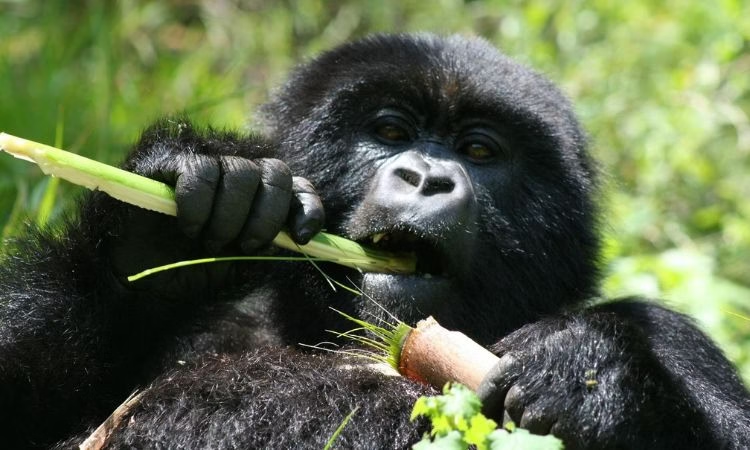
Travel Guide
Discover what it’s like to spend one unforgettable hour with mountain gorillas in Uganda or Rwanda. Learn what to expect and why it matters.
Spending one hour with gorillas in their natural forest habitat is the defining moment of a mountain gorilla trekking safari. The encounter may last only sixty minutes, but reaching that moment can involve months of planning, an early morning briefing and several hours of hiking through one of Africa's mountain forests.
Uganda and Rwanda both provide regulated mountain gorilla trekking experiences. Uganda offers trekking in Bwindi Impenetrable National Park and Mgahinga Gorilla National Park, while Rwanda offers trekking in Volcanoes National Park.
Once trackers locate your assigned habituated gorilla family, the official observation period begins. For the next hour, visitors quietly watch these wild primates feed, rest, groom, move and interact.
The one-hour limit is fundamentally a conservation measure.
Mountain gorillas are habituated to carefully controlled human presence, but they remain wild animals. Limiting exposure reduces disturbance and helps gorillas continue their normal daily routines.
Human health is another important concern.
Gorillas are biologically close to humans and can be vulnerable to diseases carried by people. Managing group sizes, viewing duration and distance helps reduce risks.
The one-hour system also allows tourism to generate conservation revenue without turning gorilla families into animals surrounded by visitors throughout the day.
Each trekking group therefore enters the forest understanding that the gorillas' welfare takes priority.
Your gorilla trekking day begins early.
Visitors report to the appropriate park headquarters or briefing point, where rangers explain what to expect.
The briefing covers forest safety, gorilla behavior and rules that must be followed during the encounter.
Groups are then assigned to specific habituated gorilla families.
In standard trekking, the number of tourists assigned to a family is limited. Uganda and Rwanda generally allow up to eight visitors in a standard trekking group.
Assignments can take several considerations into account, including the location of gorilla families and operational decisions by park authorities.
After the briefing, guides lead trekkers toward the forest.
The journey to the gorillas is unpredictable because they move freely.
A family encountered relatively close to the starting area one day may have moved deeper into the forest by the following morning.
The trek may therefore last from a relatively short period to several hours.
Terrain can be challenging. Bwindi's name reflects its dense forest character, while the Virunga landscapes of Mgahinga and Volcanoes National Park include steep volcanic slopes.
Mud, roots, vegetation and changes in elevation can make progress physically demanding.
This uncertainty is part of the experience. Gorilla trekking is not a zoo visit; it is a search for wild primates within a living ecosystem.
The atmosphere changes when guides indicate that the gorillas are nearby.
Visitors are normally asked to prepare cameras, secure unnecessary belongings and listen closely to final instructions.
Walking sticks may be left at an appropriate point before the closest approach.
Guides then lead the group carefully toward the gorilla family.
The first sighting can be surprisingly subtle. You may initially notice movement through vegetation, a dark shape beneath leaves or the sound of branches breaking.
Then the forest opens just enough to reveal an individual gorilla.
That moment marks the beginning of an extraordinary wildlife encounter.
The official viewing period begins once the gorilla family has been located and the guides determine that the encounter is underway.
From that point, time seems to move unusually quickly.
Visitors often arrive expecting sixty minutes to feel substantial, yet the combination of concentration, photography and constantly changing gorilla behavior can make the hour pass rapidly.
The best approach is not to spend the entire encounter looking through a camera.
Take photographs, but also lower the camera periodically and simply observe.
The experience becomes more memorable when you notice sounds, movements and relationships rather than concentrating exclusively on images.
Every encounter is different.
Gorillas may be feeding when you arrive. Adults can spend long periods pulling leaves, stems and other vegetation toward themselves.
At another time, much of the family may be resting.
Young gorillas can provide moments of energetic activity as they climb, chase one another or explore vegetation.
Mothers may hold infants close or allow slightly older youngsters to move around them.
A silverback can appear remarkably calm, but his physical size and role within the group are unmistakable.
Grooming, resting and subtle communication between family members can be just as interesting as more dramatic behavior.
For many visitors, seeing a mature silverback is one of the most powerful moments of spending one hour with gorillas.
Adult males develop the characteristic silver coloration across their backs as they mature.
A dominant silverback plays a major role within the family, including protection and group leadership.
He may spend much of the encounter feeding or resting rather than displaying.
Visitors should never interpret calm behavior as permission to move closer.
Gorillas are enormously powerful wild animals, and all viewing takes place under the control of experienced rangers.
If a gorilla changes position or approaches, remain calm and follow instructions immediately.
Gorilla family relationships often become one of the most memorable aspects of trekking.
Mothers may carry young infants, groom them or keep them nearby while feeding.
As youngsters become more independent, they explore their surroundings and interact with other members of the family.
Watching these relationships at close range helps visitors understand why gorilla conservation is about more than protecting individual animals.
Each habituated group is a functioning social family with established relationships.
The one-hour observation period provides a brief window into that social structure without attempting to control it.
Photography is permitted, but flash photography is prohibited.
Forest conditions can be challenging. Light may be low, gorillas can move between vegetation, and bright openings can create strong contrasts.
Visitors should learn essential camera settings before entering the forest rather than trying to understand unfamiliar equipment during the limited viewing period.
Keep spare batteries and memory cards easily accessible.
Protect equipment from rain using a waterproof bag or camera cover.
Phones can also capture excellent images, but avoid moving closer simply to improve a photograph.
The ranger's instructions and the welfare of the gorillas always take priority.
Visitors are instructed to maintain the required distance from gorillas wherever circumstances allow.
Gorillas themselves do not know tourism rules and can occasionally move closer.
If this happens, do not touch the animal, reach toward it or attempt to take a selfie at dangerously close range.
Remain calm and follow the guide's directions.
The distance rule reduces disturbance and helps protect gorillas from potential disease transmission.
It also reminds visitors that habituation does not make gorillas domesticated.
The privilege is to observe their natural behavior, not to initiate interaction.
Visitors with symptoms of contagious illness may not be allowed to trek.
This can be disappointing after traveling a long distance, but protecting mountain gorillas must come first.
Follow current requirements concerning masks and other health measures.
Never cough or sneeze toward gorillas. If you need to turn away or follow another health procedure, listen to your guide.
Food and drinks should not be consumed near the gorillas.
These precautions are essential because the survival of a threatened species is more important than any individual tourist's photograph or itinerary.
Rangers will indicate when the observation period is approaching its end.
After sixty minutes, the group begins moving away.
The departure can feel surprisingly emotional because visitors have spent considerable effort reaching the gorillas and quickly become absorbed in observing them.
Once safely away from the family, the return hike begins.
Depending on where the gorillas were located, the walk back may be short or may require another substantial trek.
Many visitors use the return journey to reflect on what they have seen rather than treating the experience as finished the moment the observation hour ends.
A permit is required for every trekker.
In Uganda, a standard gorilla trekking permit costs USD 800 per person.
Rwanda's standard gorilla permit costs USD 1,500 per person.
Permits are date-specific and limited. During popular travel periods, they can sell out months in advance.
Booking four to six months ahead is sensible when traveling during peak periods, while even earlier arrangements can be useful for groups or travelers with fixed dates.
The minimum trekking age is 15.
Permit availability should be confirmed before committing to accommodation and complicated flight arrangements.
Both countries provide exceptional opportunities to spend one hour with gorillas.
Uganda offers Bwindi Impenetrable National Park and Mgahinga Gorilla National Park. Bwindi has multiple trekking sectors, which makes matching the permit with the correct accommodation location particularly important.
Rwanda's Volcanoes National Park is reached from the Musanze region and is relatively accessible by road from Kigali.
The decision can depend on permit cost, available time, desired accommodation, flights and whether other safari activities are being added.
Uganda can combine naturally with chimpanzee tracking and savannah wildlife parks, while Rwanda can combine gorilla trekking with Kigali and Akagera National Park.
You do not need to be an elite athlete, but reasonable fitness makes trekking more comfortable.
Regular walking before your trip can help. If possible, include hills or stairs because gorilla habitats are mountainous.
The forest may be slippery, so balance and leg strength matter.
Hiring a porter is highly recommended. A porter can carry your daypack and assist on difficult sections.
This makes trekking easier while also supporting local employment around the gorilla parks.
Move at a sustainable pace and tell your guide if you need a short rest.
Wear sturdy waterproof hiking boots with good traction.
Long trousers and a long-sleeved shirt protect against vegetation and insects. Tucking trousers into socks can provide additional protection.
Bring a rain jacket regardless of season. Mountain forests can receive rainfall unexpectedly.
Gardening gloves are useful when holding vegetation for balance.
Carry sufficient drinking water, packed food where advised, sun protection and any essential personal medication.
Keep valuables and camera equipment protected from rain.
Good preparation allows you to focus on the gorillas rather than discomfort.
Gorilla tourism has become closely connected with conservation.
Permit revenue contributes to the system that protects gorilla habitat and supports monitoring and protected-area management.
Tourism also creates employment for trackers, rangers, guides, porters, lodge workers, drivers and other people around gorilla destinations.
Responsible tourism cannot solve every conservation challenge, but properly managed trekking gives mountain gorillas substantial economic and social value as living wild animals.
Visitors contribute most effectively when they follow regulations and choose responsible tourism practices.
The best way to experience the encounter is to arrive prepared but without expecting a specific scene.
You may dream of seeing a silverback chest-beat or an infant playing directly in front of you. That may happen, or the family may spend much of the hour quietly feeding and resting.
Both are authentic gorilla behavior.
Avoid measuring the quality of the trek by how dramatic your photographs are.
Listen to the forest. Watch how family members respond to one another. Notice their hands, expressions and movements.
The value of the experience comes from witnessing wild gorillas as they are.
Spending one hour with gorillas requires a permit, suitable physical preparation, appropriate equipment and respect for strict conservation rules.
Yet the practical preparations fade into the background once the gorillas appear.
For sixty minutes, visitors have the rare privilege of observing one of humanity's closest wild relatives inside the forests where these animals have evolved and survived.
The hour is intentionally limited, but its impact can last much longer.
Book your permit early, prepare for unpredictable forest conditions and enter the experience with patience. Follow your guides, respect the gorillas' space and remember to spend part of the encounter simply watching.
One hour may sound short before the trek. Afterward, it can become the hour you remember most clearly from your entire African journey.

Nshongi Gorilla Family in Bwindi: History, Location and Trekking Guide The Nshongi Gorilla Family holds an important place…
Read article →
Mishaya Gorilla Family in Bwindi: History, Trekking and What to Know The Mishaya Gorilla Family is one of…
Read article →
Semuliki Hot Springs Visit Guide: What to Expect Semuliki Hot Springs offers one of the most unusual natural…
Read article →
Kidepo Valley Remote Safari Guide: What to Expect Kidepo Valley National Park offers one of Uganda's most remote…
Read article →