

Nshongi Gorilla Family in Bwindi
Nshongi Gorilla Family in Bwindi: History, Location and Trekking Guide The Nshongi Gorilla Family holds an important place…
Read article →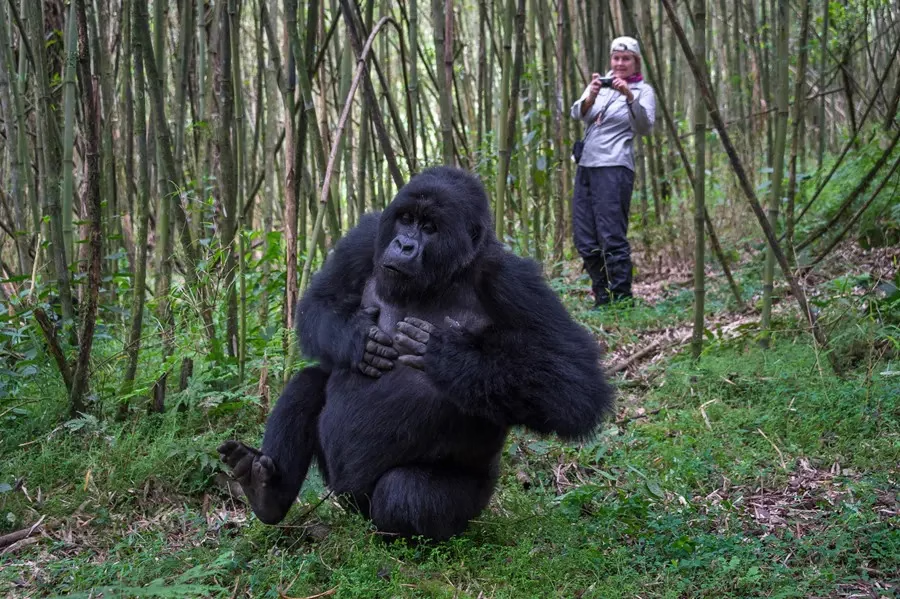
Travel Guide
Learn why you cannot touch a gorilla during trekking. Discover the rules, safe distances, and the best way to enjoy gorilla encounters responsibly.
Can I touch a gorilla is an understandable question for travelers preparing for their first gorilla trekking experience. The simple principle is that visitors should not touch mountain gorillas. Gorilla trekking is a carefully managed wildlife encounter, not an interactive animal experience, and physical contact is inconsistent with responsible observation.
The purpose of trekking is to enter the gorillas' natural habitat under controlled conditions while minimizing disturbance. Visitors are expected to follow the instructions provided during the official briefing and by guides throughout the trek.
Rules concerning distance, movement, health and photography help protect both the gorillas and the people visiting them.
Mountain gorillas are wild animals.
Even though habituated groups have gradually become accustomed to carefully controlled human presence, habituation does not make them domesticated.
Visitors should never interpret a gorilla's tolerance of nearby observers as an invitation to interact physically.
Touching would interfere with the controlled nature of the encounter.
It could also create unnecessary health and safety risks.
The correct approach is to observe quietly and allow the gorillas to behave naturally.
Images of calm gorillas can create the misleading impression that they are approachable in the same way as familiar domestic animals.
They are not.
Mountain gorillas are powerful wild primates living within protected forest habitats.
Habituation allows conservation personnel and regulated visitors to observe certain gorilla groups without provoking the same response that completely unhabituated animals might display.
It does not remove their wild nature.
Visitors should therefore respect every instruction provided by the trekking team.
Gorilla trekking includes rules concerning the space visitors should maintain around the animals.
Travelers should follow the current distance instructions communicated during the official briefing and by guides in the forest.
Visitors should not deliberately move closer for photographs.
A gorilla may sometimes move in a direction that changes the distance unexpectedly.
If this occurs, travelers should remain calm and follow the guide's instructions rather than attempting to touch the animal or move unpredictably.
A gorilla may occasionally move toward or past visitors.
This does not give the traveler permission to initiate contact.
The correct response is to remain calm and listen carefully to the guide.
Sudden movements should be avoided.
Visitors should not reach toward the gorilla, attempt a selfie or move into its path.
Guides are trained to manage the encounter and will provide instructions appropriate to the situation.
The traveler's role is to follow those directions.
Health is one of the major reasons gorilla tourism is tightly controlled.
Great apes and humans share biological similarities that make disease transmission an important conservation concern.
Travelers who feel unwell should communicate honestly with their operator or the relevant authorities.
Attempting to hide illness because a permit was expensive can place wildlife at risk.
Visitors should follow any current health procedures communicated for their trek.
These requirements may change, so travelers should rely on the official instructions provided for their travel dates.
Visitors should never offer food to gorillas.
Feeding wild animals changes natural behavior and creates unnecessary risks.
Food should remain packed away according to guide instructions.
Travelers should also avoid eating near gorillas if instructed not to do so.
Waste must never be left in the forest.
Even items that appear biodegradable can create problems.
Everything brought into the protected area should be managed responsibly.
A gorilla encounter can be extremely exciting, but visitors should control their reactions.
Shouting and sudden loud noises can disturb wildlife.
Travelers should speak quietly and listen to their guides.
Phones should not create unnecessary sound.
The quieter atmosphere also improves the quality of the experience.
Visitors can hear movement and natural forest sounds that would otherwise be missed.
Responsible behavior helps the gorillas continue their normal activities with minimal disruption.
Photography is one of the main reasons visitors are tempted to move closer.
A branch, difficult light or another group member may seem to block the perfect image.
These are not reasons to ignore regulations.
Travelers should photograph from the position permitted by the guide.
Flash photography should not be used where prohibited.
Camera settings should be prepared before reaching the gorillas.
Understanding basic exposure and focus reduces the temptation to spend the entire encounter struggling with equipment.
A telephoto or versatile zoom lens can help photographers work from an appropriate position.
Phone users should avoid stepping forward simply because the device has a wider lens.
The best photograph is not always a tightly framed portrait.
Images showing gorillas within vegetation can communicate the forest environment more effectively.
Visitors should also put the camera down occasionally.
Watching the gorillas directly can create memories that are easily lost when the entire encounter is experienced through a screen.
The guide's instructions take priority over a visitor's personal assumptions.
Conditions can change quickly.
A gorilla may move, another individual may appear or the group may need to reposition.
Visitors should respond promptly when instructed.
Travelers should not separate from the group in search of a different camera angle.
They should also avoid blocking the movement of guides or other trekkers.
Gorilla tourism works because visitor behavior is carefully managed.
Good preparation makes it easier to concentrate on the rules once gorillas are encountered.
Visitors should wear strong walking footwear and practical forest clothing.
Long trousers and long sleeves can help protect against vegetation.
Rain protection is important.
A small backpack can carry water, personal essentials and camera equipment.
Travelers should avoid unnecessary weight.
Where legitimate porter services are available, hiring a porter can make the forest walk more manageable.
The pre-trek briefing is not a formality.
Visitors should listen carefully even if they have already read about gorilla rules online.
The briefing provides instructions relevant to the actual trekking experience.
Travelers can ask questions if something is unclear.
This is the correct time to clarify expectations about photography, movement, health precautions and behavior around the gorillas.
Online information should never be used as an excuse to disregard instructions given by authorized personnel on the day.
Responsible wildlife tourism requires accepting that the animal controls the encounter.
A gorilla may face away from visitors, move behind vegetation or leave a photographer without a perfect view.
That is part of observing wildlife naturally.
Visitors should not expect guides to manipulate the animals.
Respecting space means accepting imperfect photographs and unpredictable behavior.
This is precisely what distinguishes a genuine wildlife experience from visiting animals in a controlled display.
Families planning a primate safari should check the current age requirements for gorilla trekking before booking.
Parents should never assume that children can accompany the trek simply because they are physically fit.
Permit regulations apply independently of a family's preferences.
For eligible younger participants, adults should make sure they understand the importance of remaining calm and following instructions.
Current age and permit requirements should be confirmed with the relevant authorities or safari operator for the intended destination.
Gorilla tourism can contribute to conservation when it is carefully controlled.
Visitor regulations reduce disturbance and help manage health and behavioral risks.
Travelers contribute by respecting these rules rather than searching for exceptions.
Responsible tourism also includes respecting porters, guides and communities around protected areas.
Visitors should avoid littering and remain on appropriate routes.
Conservation is not only the responsibility of park staff. Every visitor's behavior matters during the trek.
Physical contact is not necessary for a powerful gorilla experience.
Simply observing a mountain gorilla at close but regulated range can be extraordinary.
Visitors can watch facial expressions, feeding behavior, movement and interactions between individuals.
The forest setting adds to the encounter.
The knowledge that the animals are wild makes the experience more meaningful, not less.
Travelers should focus on observation rather than interaction.
For travelers asking Can I touch a gorilla, the responsible answer is that visitors should not touch gorillas during trekking.
The animals remain wild, and regulated distance and behavior are important components of both conservation and visitor safety.
If a gorilla moves unexpectedly close, remain calm and follow the guide's instructions. Do not reach toward the animal or attempt to create physical contact.
Visitors should also follow current health, photography and movement rules provided during the official briefing.
A gorilla encounter does not become more meaningful because a traveler touches an animal. Its value comes from being allowed to observe mountain gorillas behaving naturally in their forest habitat while participating in a carefully managed tourism system designed to protect them.

Nshongi Gorilla Family in Bwindi: History, Location and Trekking Guide The Nshongi Gorilla Family holds an important place…
Read article →
Mishaya Gorilla Family in Bwindi: History, Trekking and What to Know The Mishaya Gorilla Family is one of…
Read article →
Semuliki Hot Springs Visit Guide: What to Expect Semuliki Hot Springs offers one of the most unusual natural…
Read article →
Kidepo Valley Remote Safari Guide: What to Expect Kidepo Valley National Park offers one of Uganda's most remote…
Read article →