

Nshongi Gorilla Family in Bwindi
Nshongi Gorilla Family in Bwindi: History, Location and Trekking Guide The Nshongi Gorilla Family holds an important place…
Read article →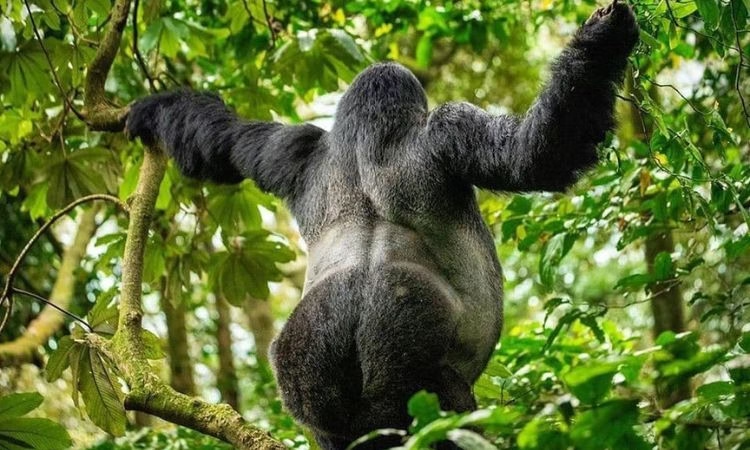
Travel Guide
Discover the 3-day Gorilla Habituation Experience in Bwindi Impenetrable Forest, Uganda. Spend four hours with gorillas, explore the forest, and enjoy a unique safari adventure.
The Gorilla Habituation Experience in Bwindi Forest offers travelers an extended mountain gorilla encounter within Uganda's Bwindi Impenetrable National Park. Unlike the standard gorilla trekking experience described in the supplied source, the habituation experience allows visitors to spend up to four hours observing a semi-habituated gorilla family after it has been located.
The supplied itinerary places the experience in the southern part of Bwindi, with the trekking day beginning from Rushaga. Visitors enter the forest in the company of experienced rangers, guides, trackers, and researchers, combining the physical adventure of forest trekking with an opportunity to observe gorilla behavior over a longer period.
This 3-day Gorilla Habituation Experience in Bwindi Forest is structured around a transfer from Kampala or Entebbe on Day 1, the main gorilla habituation activity on Day 2, and the return journey on Day 3.
Gorilla habituation is the gradual process through which wild gorillas become accustomed to the controlled presence of humans.
The supplied source describes participants visiting a semi-habituated gorilla family rather than a group already accustomed to standard tourism encounters.
Researchers and trackers play an important role in this process.
The most significant feature highlighted by the source is time.
Once the gorilla group has been located, visitors participating in the habituation experience are described as spending four full hours observing the gorillas.
This is considerably longer than the standard one-hour gorilla encounter referenced in the supplied material.
Four hours can provide more time to observe changes in behavior.
Gorillas may feed, rest, groom, move through vegetation, interact with one another, or play during the observation period.
No specific behavior can be guaranteed because the animals remain wild.
The presence of researchers adds an educational dimension.
Visitors can learn how gorilla behavior is monitored and how animals gradually become familiar with carefully managed human presence.
This makes the experience more than an extended photography session.
The first day begins with travel from Entebbe or Kampala toward southwestern Uganda.
The supplied source describes the journey as passing through rolling hills, banana plantations, local markets, and other countryside landscapes.
The drive itself becomes an introduction to rural Uganda.
Travelers should be prepared for a substantial road journey.
The source structures most of Day 1 around reaching Bwindi.
Starting early creates more time for planned stops and helps guests arrive at their lodge with enough time to settle in.
As travelers move southwest, the scenery changes considerably.
Urban surroundings gradually give way to cultivated hills, villages, farms, roadside markets, and increasingly mountainous landscapes.
The journey provides a useful visual introduction to the region.
The supplied itinerary includes a stop at the Equator for photographs.
This creates a natural break during the road transfer.
Travelers can stretch, take photographs, and continue toward southwestern Uganda.
Lunch is also scheduled during the journey.
Breaking the drive into sections can make the transfer more comfortable.
The exact lunch location depends on the operational itinerary.
By the time travelers reach Bwindi, the landscape has changed dramatically.
The dense forest and surrounding hills create a sense of arrival at one of Uganda's major primate destinations.
The evening is intentionally relaxed because the following day requires an early start.
Guests should organize their trekking clothing and equipment before going to bed.
Comfortable hiking footwear, appropriate clothing, water, and protection for personal belongings are useful for forest conditions.
Travelers should follow any additional packing guidance provided by their operator.
The supplied source lists:
Lunch & Dinner
Travelers should confirm the exact meal arrangements attached to their accommodation package.
The source lists the following budget examples:
Buhoma Community Rest Camp
Broadbill Forest Camp
These properties are retained exactly as provided in the source.
Actual availability should be checked when booking.
The supplied itinerary lists:
Rushaga Gorilla Camp
Ichumbi Gorilla Lodge
Location can be particularly important for the habituation experience because the source places the morning briefing at Rushaga.
Luxury examples provided are:
Four Gorillas Lodge
Clouds Mountain Gorilla Lodge
Travelers should choose accommodation according to budget, preferred comfort level, and practical access to the trekking area.
Day 2 is the centerpiece of the safari.
After an early breakfast, travelers report for the morning briefing.
The supplied source places this at the park headquarters in Rushaga.
The briefing prepares participants for the forest experience.
Travelers should listen carefully to instructions from park personnel.
Gorilla tourism depends on visitors following conservation and safety procedures.
After the briefing, participants begin trekking with experienced rangers, guides, and researchers.
Bwindi's terrain can be demanding.
The forest is dense, and the amount of walking required depends on where the gorilla group is located.
The target is a semi-habituated gorilla family.
Trackers use their knowledge of the forest and gorilla movements to search for the group.
The search itself is part of the adventure.
The supplied source does not promise a fixed trekking duration before the gorillas are found.
This is important because wild animals move naturally through their habitat.
Travelers should prepare for a genuine forest trek rather than expecting a short walk.
Once the gorillas have been located, the supplied source states that participants can spend four hours observing them.
This extended period defines the Gorilla Habituation Experience.
Visitors should use the time to observe behavior rather than concentrating exclusively on photography.
Feeding behavior can reveal how gorillas interact with their forest environment.
Visitors may see animals selecting vegetation and moving between feeding areas.
Their behavior determines the pace of the encounter.
Grooming is another behavior mentioned in the source.
Social interactions can provide insight into relationships within a gorilla family.
Extended observation increases the opportunity to notice these quieter moments.
Younger gorillas may play and interact energetically.
These moments can be particularly memorable.
Visitors should remain calm and follow ranger instructions regardless of how active the gorillas become.
Four hours provides time to observe relationships rather than only individual animals.
Adults, juveniles, and younger gorillas may behave differently.
Researchers and guides can help visitors interpret what they are seeing.
The supplied source emphasizes photography as an advantage of the longer experience.
Forest photography, however, can be challenging.
Vegetation, changing light, movement, and humidity all influence conditions.
The welfare of the gorillas comes before obtaining a photograph.
Visitors should follow all instructions about distance, movement, and equipment.
An extended encounter provides enough time that there is usually no reason to rush every photographic opportunity.
One of the most distinctive aspects of the experience is learning about the habituation process itself.
Visitors are not simply observing an already established tourism routine.
The supplied source describes participation alongside people involved in researching and gradually familiarizing gorillas with controlled human presence.
The source connects the experience with gorilla conservation.
Regulated tourism can contribute to broader conservation efforts when managed around wildlife protection.
Travelers should therefore view rules as part of the experience rather than an inconvenience.
After completing the habituation experience, guests return to their lodge.
A demanding forest trek followed by several hours of observation can make this a physically intensive day.
The evening is reserved for relaxation and dinner.
The supplied itinerary lists:
Breakfast, Lunch & Dinner
The source keeps guests at the same accommodation used on Day 1.
This avoids unnecessary transfers.
Day 3 begins with breakfast before the journey back toward Kampala or Entebbe.
Travelers leave the Bwindi landscape and retrace part of the route through southwestern Uganda.
The return journey provides another opportunity to appreciate the countryside.
Depending on the chosen lodge, the morning may provide views toward forested hills.
After the previous day's trek, a relaxed breakfast gives travelers time to reflect on the gorilla experience.
The supplied source mentions possible stops at roadside markets.
These can break up the drive and provide opportunities to see local products.
Travelers should follow the schedule established by their guide.
Craft-shop stops are also mentioned.
Travelers interested in souvenirs can browse locally made items.
Purchases should be made according to personal interest rather than pressure.
The source states that guests can be dropped in either Kampala or Entebbe during the evening depending on onward travel arrangements.
Anyone connecting to a flight should ensure the itinerary allows sufficient time.
Road journeys can be affected by traffic and other delays.
The supplied source lists:
Breakfast & Lunch
Dinner arrangements depend on the traveler's onward plans.
The source states that Bwindi can welcome visitors throughout the year.
It identifies June to September and December to February as favorable periods because trails tend to be drier and trekking can be easier.
This period is presented as one of the preferred trekking seasons.
Drier conditions can improve trail accessibility.
The forest environment can nevertheless remain damp.
The supplied material also identifies December through February.
Travelers visiting during this period should still prepare for changing mountain and forest weather.
March through May is described as part of the lower season.
The source emphasizes lush scenery and fewer crowds.
Rain can make trekking more challenging.
October and November are similarly described as wetter lower-season months.
Travelers willing to accept muddier trails may appreciate the green forest environment.
The habituation experience can involve substantial walking.
Visitors should be comfortable with uneven forest terrain.
Regular walking before the safari can make the trekking day more enjoyable.
The defining difference in the supplied source is the four-hour observation period.
Standard gorilla trekking is described as providing a one-hour encounter once gorillas are located.
The habituation experience therefore gives travelers substantially more observation time.
Travelers with a strong interest in gorilla behavior may particularly appreciate the longer encounter.
The experience allows more time to notice social interactions and individual behavior.
It can also suit wildlife photographers who value patience.
The Gorilla Habituation Experience in Bwindi Forest - 3 Days Safari combines an extended gorilla encounter with a journey through southwestern Uganda and the dense environment of Bwindi Impenetrable National Park.
Day 1 focuses on the transfer from Kampala or Entebbe, including countryside scenery and an Equator stop. Day 2 begins with a Rushaga briefing before participants enter the forest with rangers, trackers, guides, and researchers.
Once the semi-habituated gorilla family is located, the supplied source describes an observation period of up to four hours. This creates more time for watching feeding, grooming, play, movement, and social interactions.
Day 3 completes the safari with the return journey toward Kampala or Entebbe.
For travelers wanting more time observing mountain gorillas than the standard trek described in the source, the Gorilla Habituation Experience in bwindi provides an immersive forest adventure built around extended observation and conservation-focused learning.

Nshongi Gorilla Family in Bwindi: History, Location and Trekking Guide The Nshongi Gorilla Family holds an important place…
Read article →
Mishaya Gorilla Family in Bwindi: History, Trekking and What to Know The Mishaya Gorilla Family is one of…
Read article →
Semuliki Hot Springs Visit Guide: What to Expect Semuliki Hot Springs offers one of the most unusual natural…
Read article →
Kidepo Valley Remote Safari Guide: What to Expect Kidepo Valley National Park offers one of Uganda's most remote…
Read article →