
3 Day Family Safari
3-Day Family Birdwatching in Gisenyi for Photographers
Enjoy a 3-day family birdwatching safari in Gisenyi with Lake Kivu scenery, photography opportunities and rewarding birding experiences.
- Family Experience Family-Friendly Lodges
- Wildlife Safari An unforgettable encounter
- Kigali Experience Culture, dining & relaxation
- Tailor-Made Customised for you
Overview
Why Choose Gisenyi for Family Birdwatching?
A 3-Day Family Birdwatching in Gisenyi for Photographers safari combines the relaxed atmosphere of Lake Kivu with rewarding opportunities to observe and photograph Rwanda's birdlife. Gisenyi, commonly associated with the wider Rubavu area, provides a particularly attractive base because families can combine birding with lake scenery, gentle outdoor activities and views toward the surrounding highlands.
The itinerary is designed for families in which one or more members enjoy photography but everyone still wants an engaging holiday. Instead of spending every hour pursuing specialist species, the programme balances dedicated birding periods with scenic stops, family time and opportunities to explore the Lake Kivu environment.
Rwanda supports an impressive variety of birds because its habitats range from wetlands and savannah to montane rainforest and high-altitude landscapes. Gisenyi itself is not intended to replace Rwanda's specialist forest birding destinations. Its advantage is accessibility and variety, particularly for families who want to enjoy birdwatching in Rwanda without undertaking an extremely demanding expedition.
Gisenyi offers a different birding atmosphere from the dense forests of Nyungwe or the extensive savannah of Akagera. Lake Kivu dominates the landscape and creates opportunities to observe birds associated with the shoreline, gardens, open spaces and surrounding vegetation.
For photographers, the environment can be particularly attractive in the early morning and late afternoon. Soft light over the lake can create beautiful backgrounds, while birds using shoreline vegetation may be easier to photograph than species hidden deep inside a rainforest.
Families also benefit from the relaxed nature of the destination. A child or partner who becomes tired of birdwatching can still appreciate the lake, scenery and town rather than feeling trapped in a specialist birding programme.
Gisenyi can also be combined easily with Volcanoes National Park. This makes the safari suitable for families who want bird photography as one component of a broader northern Rwanda journey.

Detailed Itinerary
-
DAY
1
Journey to Gisenyi and Lake Kivu Birding
The safari can begin in Kigali with a morning departure toward northwestern Rwanda. The drive introduces travellers to the country's hilly landscapes before continuing toward the shores of Lake Kivu.
Families should treat the road journey as part of the experience. Scenic stops can be made where safe and practical, allowing photographers to capture rural landscapes and giving children regular breaks.
After arriving in Gisenyi, the family checks into its selected accommodation. A property near the lake can be particularly convenient because it reduces transfer time for early and late photography sessions.
The afternoon is devoted to introductory birding around suitable local habitats. The objective is not simply to accumulate a long species list. Instead, the guide can help family members identify common birds and understand how different species use the environment.
Photographers can begin experimenting with the local light and backgrounds. Lake Kivu can produce attractive compositions in which birds become part of a wider landscape rather than isolated subjects.
Photographing Birds Around Lake Kivu
Successful Lake Kivu bird photography requires observation as much as technical equipment. Birds often repeat behaviours, returning to preferred perches or feeding areas. Waiting quietly can therefore produce better results than constantly moving in pursuit of subjects.
Morning light is usually valuable because it can be softer and more directional. Birds are also frequently active during the cooler early hours.
A telephoto zoom lens is useful because it allows photographers to adjust quickly as subjects move. Families should avoid carrying more equipment than they can comfortably manage, especially when combining photography with walking.
A wider lens can also be valuable. Gisenyi's strongest visual characteristic is the lake itself, so photographs incorporating water, mountains, vegetation and birds can communicate more about the destination than tightly cropped portraits alone.
Children interested in photography can participate with simpler cameras or smartphones. Encouraging them to photograph habitats as well as birds can make the activity more accessible.
-
DAY
2
Dedicated Family Birdwatching Experience
An early start on the second day provides the best opportunity for focused birdwatching. Breakfast arrangements can be coordinated around the outing so the family does not lose the most productive morning period.
The guide selects appropriate locations according to current conditions and local bird activity. Habitats may include lakeshore areas, gardens, open vegetation and other suitable environments around Rubavu.
Birding with a knowledgeable guide is valuable because many species are first detected by sound. The guide can identify calls, explain behaviour and help visitors locate birds that would otherwise remain unnoticed.
Photography requires additional patience. Seeing a bird and obtaining a clean photograph are very different achievements. Vegetation, distance, movement and lighting all influence the result.
Families should allow the experience to develop naturally. Some periods may be busy with bird activity, while others require waiting. Children can be encouraged to maintain their own species checklist or photography challenge to keep the activity engaging.
A Family-Friendly Approach to Birding
Specialist birding tours sometimes begin before sunrise and continue for many hours. That approach is not always appropriate for a family holiday.
This family birdwatching safari in Rwanda uses shorter, productive sessions with breaks in between. The aim is to preserve enthusiasm rather than exhausting younger participants.
Parents can introduce children to simple identification features such as colour, size, beak shape and behaviour. Turning observations into questions makes birding interactive.
Photography can provide another layer of engagement. Children may enjoy reviewing their images later and trying to identify what they photographed.
The guide should also remain flexible. If family members are enjoying a particular area, there is no need to move immediately simply because another location was included in the original plan.
Combining Birds with Gisenyi's Scenery
Gisenyi is more than a birding base. The destination's Lake Kivu setting provides a relaxed environment that works particularly well after an early morning photography session.
Families can spend part of the day enjoying the lakeside or taking a scenic excursion where appropriate. This gives non-birding family members a stronger sense of holiday variety.
Photographers can continue working even during these relaxed periods. Boats, changing weather, distant hills and reflections on the lake create additional subjects.
Sunset can be especially rewarding when conditions are favourable. Rather than concentrating exclusively on wildlife, photographers can create a broader visual story of Gisenyi and Lake Kivu.
This balance is one reason the itinerary suits families better than a highly specialised birding expedition.
Camera Equipment for the Safari
A DSLR or mirrorless camera paired with a telephoto zoom is a practical choice for bird photography. A lens with enough reach to photograph small subjects at a respectful distance is useful, although extremely large professional lenses are not essential for enjoying the trip.
Spare batteries and memory cards should be carried because bird photography can involve taking many frames.
A lightweight support such as a monopod may be useful for some photographers, but equipment should remain manageable. Family travellers frequently need to carry additional personal items, so keeping the camera setup simple can make the experience more enjoyable.
Rain protection is advisable because weather can change. A dry bag or protective cover helps protect cameras during unexpected showers or boat-related activities.
Binoculars are equally important. Photography should not become the only way of seeing birds, and binoculars allow family members to enjoy species that are difficult to photograph.
Bird Photography Ethics
A good photograph should never come at the expense of wildlife welfare. Photographers should avoid approaching nests too closely or repeatedly disturbing birds to force them into better positions.
Playback of bird calls should be used only according to responsible guiding practices. Excessive use can disrupt territorial and breeding behaviour.
Families can use the safari as an opportunity to teach younger travellers about ethical wildlife observation. Remaining quiet, maintaining distance and allowing birds to behave naturally often leads to more authentic photographs.
Visitors should also respect private property and community spaces when searching for birds. A guide helps ensure that access is appropriate.
Responsible Rwanda bird photography protects the very subjects travellers have come to enjoy.

-
DAY
3
Morning Photography and Departure
The final morning provides another opportunity for birding before breakfast or shortly afterward, depending on the family's preferred pace.
Conditions may differ significantly from the first two days. Changes in cloud cover, wind or bird activity can make familiar locations feel completely new.
Photographers may use this final session to concentrate on species or compositions they have not yet captured. Families can also revisit a favourite lakeside location.
After breakfast and check-out, the journey continues toward Kigali or another destination. Travellers combining the trip with Volcanoes National Park can instead adjust the route according to their wider itinerary.
The three-day structure keeps the safari compact while providing enough time for several distinct photography sessions.
Best Time for Birdwatching in Gisenyi
Birdwatching is possible throughout the year because resident species remain present across seasons. Migratory movements can add further interest during appropriate periods.
Weather influences photography as much as bird abundance. Clear mornings may provide stronger light, while overcast conditions can reduce harsh shadows and create even illumination.
Rain should not automatically be considered negative. After showers, birds may become active and vegetation can appear particularly vibrant.
Families travelling with children may find relatively drier periods easier for outdoor activities, but they should still carry lightweight rain protection.
The best timing ultimately depends on whether the family's priority is birding, general sightseeing, photography or a combination of all three.
Extending the Safari to Volcanoes National Park
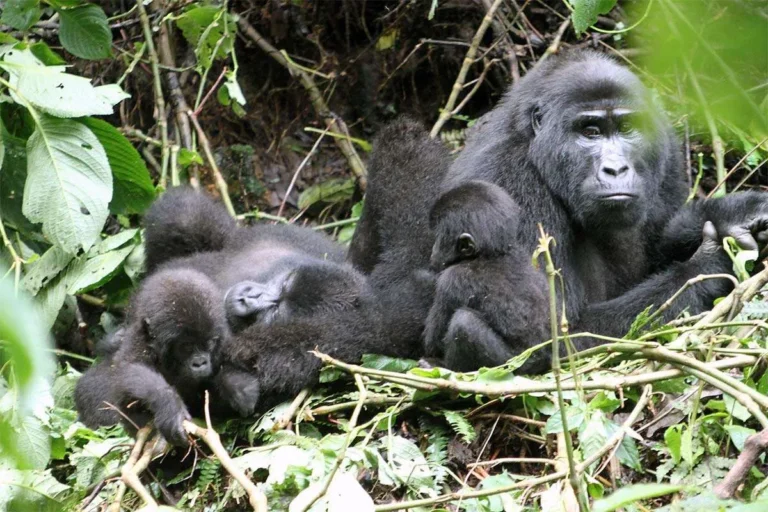
Gisenyi can be combined conveniently with the Volcanoes region. Families continuing toward Musanze can add birding in different highland habitats and, where participants meet the requirements, gorilla trekking.
This creates a more diverse wildlife itinerary. Lake Kivu offers relaxed shoreline birding, while the Volcanoes area introduces montane landscapes and different ecological conditions.
Families with younger children who cannot participate in gorilla trekking can arrange alternative experiences while eligible adults or teenagers trek.
Adding extra days also allows photographers to work more slowly rather than trying to cover several habitats in a single morning.
Who Should Choose This Safari?
The itinerary is ideal for families interested in nature but not necessarily committed to an intensive birding expedition. It also suits photographers travelling with partners or children who have broader interests.
Beginner birdwatchers can learn identification skills without feeling overwhelmed. Experienced photographers can concentrate on behaviour, composition and environmental images.
The trip is also suitable as a relaxing extension after gorilla trekking or another demanding safari.
Because the programme can be adjusted, it works for different age groups and activity levels. The most important step is communicating family interests before travel.
Plan Your Gisenyi Bird Photography Safari
A 3-Day Family Birdwatching in Gisenyi for Photographers safari combines nature, photography and family-friendly travel on the shores of Lake Kivu. Its strength lies in balance rather than extreme specialisation.
Early birding sessions provide serious opportunities for observation and photography, while relaxed lakeside periods ensure the itinerary still feels like a family holiday.
With suitable guiding, practical camera preparation and responsible wildlife behaviour, Gisenyi can become a rewarding component of a wider Rwanda birdwatching safari and a memorable destination for families who enjoy experiencing nature together.
Accommodation Options in Kigali


Ready to Experience This Family Safari?
Let our expert team customise this 3-day itinerary to match your interests and travel dates.
