
10 Day Classic Safari
10-Day Photographic Chimpanzee trekking in Gombe Stream National Park for Solo travellers
Plan a 10-day photographic chimpanzee trekking safari in Gombe for solo travellers, with forest walks, Lake Tanganyika, photography and practical tips.
- Classic Experience Handpicked Lodges & Hotels
- Chimpanzee Tracking An unforgettable encounter
- Kigali Experience Culture, dining & relaxation
- Tailor-Made Customised for you
Overview
Why Choose Gombe for Photography?
A 10-Day Photographic Chimpanzee trekking in Gombe Stream National Park for Solo travellers offers an immersive journey into one of Tanzania's most distinctive forest environments. Gombe Stream National Park lies beside Lake Tanganyika in western Tanzania and is renowned for its chimpanzees, forested mountains and long history of primate research.
For a solo traveller with a strong interest in photography, ten days create opportunities to experience the destination at a measured pace. Chimpanzees move through a natural forest environment, so photography requires patience rather than a fixed timetable. Additional time also allows the traveller to appreciate birds, other primates, vegetation and the dramatic scenery around Lake Tanganyika.
The journey requires careful logistical planning because Gombe is relatively remote. Flights, boat transfers, accommodation and park activities should be coordinated before departure. Once there, however, the slower pace becomes part of the experience.
Gombe Stream National Park provides a very different photographic environment from Tanzania's open savannah parks.
The forest creates layered compositions, filtered light and opportunities to photograph animals within their natural habitat. Chimpanzees may appear through branches, move across the forest floor or disappear into dense vegetation within seconds.
This makes preparation important.
A photographer needs to understand the camera well enough to react quickly. Autofocus performance, high-ISO capability and a versatile telephoto lens can all be useful.
However, technical equipment is only part of the experience. A strong photograph often depends more on patience, positioning and understanding animal behaviour.

Detailed Itinerary
-
DAY
1
Arrival in Tanzania
The first day should focus on arrival and preparation.
Depending on the international flight, the traveller may spend the first night in Dar es Salaam or another suitable gateway. This provides a useful buffer before continuing toward western Tanzania.
A comfortable hotel is usually sufficient for the transit night.
The traveller can also reorganise camera equipment and confirm the next day's flight arrangements. Important documents, medication and camera batteries should remain in hand luggage.
There is little value in scheduling a demanding activity after a long international journey.
-
DAY
2
Travel Toward Gombe
The journey continues toward Kigoma and the Lake Tanganyika region.
Flight schedules should be confirmed in advance because western Tanzania has fewer transport options than the country's major northern safari circuit.
After reaching the appropriate gateway, the traveller continues toward Gombe according to the current transport arrangement.
Boat travel may form part of the final approach.
The transition from urban Tanzania to the forested lakeshore is itself an important part of the experience.

-
DAY
3
First Chimpanzee Trek
The first full day introduces the traveller to chimpanzee trekking in Gombe.
Before entering the forest, the guide explains the current rules and safety requirements.
The trek then follows routes selected according to recent chimpanzee activity.
The animals are wild and mobile.
A sighting may last only a few minutes, or the group may remain with chimpanzees for longer when conditions permit.
Photographers should not rush forward when animals move.
The guide's instructions determine how the group approaches and observes the chimpanzees.

-
DAY
4
Developing a Photographic Rhythm
A second trekking day allows the photographer to become familiar with the forest.
The first day often involves learning how quickly chimpanzees move and how difficult forest photography can be.
By the second attempt, camera settings can be prepared more confidently.
The photographer can also begin noticing recurring environmental patterns.
Light may enter the canopy in narrow shafts.
Leaves can create distracting highlights.
A slightly wider composition may sometimes tell a stronger story than a close portrait.

-
DAY
5
Forest Ecology
Not every day needs to focus exclusively on chimpanzees.
Gombe's wider ecosystem deserves attention.
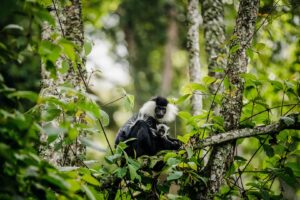
Other primates, birds, insects and plant life provide additional subjects.
A guide can explain feeding signs, tracks and calls.
This helps the photographer understand why particular animals are found in certain areas.
Environmental images can then become more informative.
Instead of producing only close-up animal portraits, the photographer can document relationships between wildlife and forest habitat.
-
DAY
6
Lake Tanganyika
A lighter day around Lake Tanganyika can provide a welcome break from trekking.
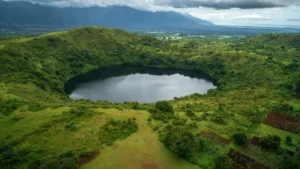
The lake creates striking landscape opportunities.
Morning and late-afternoon light can produce reflections and atmospheric views.
The contrast between deep water and forested slopes is visually powerful.
Boat-based photography may also be possible depending on the itinerary and conditions.
Camera equipment should be protected from spray.
The photographer should avoid changing lenses unnecessarily around water.
-
DAY
7
Another Trekking Opportunity
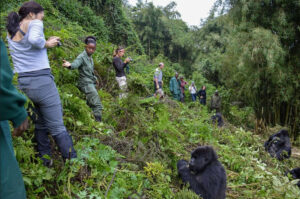
Another forest walk provides additional opportunities to photograph chimpanzee behaviour.
The photographer may now be more familiar with the guide's instructions and the movement of the animals.
Patience remains essential.
Chimpanzees may climb, rest, feed or move rapidly through the canopy.
The photographer should concentrate on behaviour rather than trying to force a particular pose.
Flash photography should only be used if specifically permitted and appropriate.
Current park guidance takes priority.
-
DAY
8
Photography and Interpretation
The eighth day can combine wildlife photography with ecological interpretation.
A guide may explain how chimpanzees interact socially and how the forest supports them.
This context can improve photographic storytelling.
A photograph of a chimpanzee becomes more meaningful when accompanied by an understanding of its surroundings.
Solo travellers can use the quieter schedule to review images.
Deleting poor photographs and checking batteries can prevent technical problems later.
Backing up important files is also advisable whenever reliable facilities are available.
-
DAY
9
Final Trek and Lake Experience
The final full day provides one more opportunity to explore.
The traveller can discuss photographic priorities with the guide.
If chimpanzee photography has already produced strong results, the focus can shift toward landscapes or other forest species.
Alternatively, the day can be dedicated to another chimpanzee search.
The best approach depends on current animal movements.
The final evening can be spent beside Lake Tanganyika, reflecting on the journey and preparing for departure.
-
DAY
10
Departure
The final day depends on flight and boat schedules.
The traveller should allow sufficient time for the transfer from Gombe toward the appropriate departure point.
Tight connections are best avoided.
Remote destinations can be affected by weather and operational changes, so a conservative schedule is valuable.
The journey back provides one last opportunity to appreciate the landscapes around Lake Tanganyika.
Photography Equipment
A practical setup is more useful than excessive equipment.
A versatile telephoto lens can cover many wildlife situations.
A wider lens is valuable for environmental portraits and landscapes.
Extra batteries are important because forest activities can last several hours.
Memory cards should have enough capacity for burst shooting.
A waterproof bag or rain cover protects equipment from tropical weather.
Photographers should also carry lens cloths because humidity and moisture can affect visibility.
Clothing for the Trek
Comfortable walking shoes with good grip are essential.
Long trousers and lightweight long sleeves provide practical protection from vegetation.
A rain jacket is useful.
The forest can feel humid, so breathable clothing is preferable.
A small backpack should contain water, camera protection and essential personal items.
Heavy bags quickly become uncomfortable on steep trails.
Solo Traveller Considerations
Solo travel does not mean travelling without professional support.
The guide remains an important part of the experience.
A solo photographer can communicate individual interests more easily and may be able to focus on specific photographic goals within group and park rules.
Shared activities can also provide opportunities to meet other travellers.
Those wanting complete control over timing should ask about private arrangements.
Responsible Chimpanzee Photography
Great apes require particularly careful treatment.
Visitors should maintain the required distance.
Chimpanzees should never be touched, fed or deliberately attracted.
Anyone who is unwell should follow current park guidance concerning whether they should participate.
Photographers should not ask guides to move closer simply for a better photograph.
A natural image taken from an appropriate distance is preferable to a technically impressive image obtained through irresponsible behaviour.
Creating a Ten-Day Balance
Ten days allow the traveller to avoid rushing.
The itinerary can combine chimpanzee trekking, forest exploration and Lake Tanganyika.
This variety is particularly valuable for photographers.
A 10-Day Photographic Chimpanzee trekking in Gombe Stream National Park for Solo travellers provides time to understand both the animals and their habitat. With professional guiding, sensible equipment and responsible photographic practices, the journey can produce a collection of images that tells a broader story than chimpanzee portraits alone. Gombe's forest, lake and wildlife create an intimate safari experience that rewards patience and careful observation.
Accommodation Options in Kigali


Ready to Experience This Classic Safari?
Let our expert team customise this 10-day itinerary to match your interests and travel dates.