
10 Day Classic Safari
10-Day Fly-in Walking safari in Tsavo East National Park for Families
Plan a 10-day family fly-in Tsavo East safari with guided walks, private game drives, elephants, comfortable camps and flexible activities.
- Classic Experience Handpicked Lodges & Hotels
- Wildlife Safari An unforgettable encounter
- Kigali Experience Culture, dining & relaxation
- Tailor-Made Customised for you
Overview
Why Choose a Fly-In Family Safari?
A 10-day fly-in walking safari in Tsavo East National Park for families combines the convenience of air travel with wildlife viewing and carefully managed activities on foot. Tsavo East is one of Kenya's largest protected landscapes, famous for elephants, broad horizons and striking red earth.
Walking adds a different dimension to the family safari, but it requires careful planning. Activities on foot are subject to park regulations, approved locations, professional guiding and age restrictions set by operators or authorities. Families should therefore confirm walking arrangements before travel, especially when younger children are included.
Ten days provides enough time to avoid rushing. Instead of spending every morning on a long game drive, families can combine vehicle safaris, shorter interpretive walks and relaxed periods at camp. The result can be more engaging for children and more comfortable for adults.
Flying reduces the amount of road travel required to reach remote safari areas from suitable departure points. This can be particularly valuable for families with children who struggle with long transfer days.
The flight itself can become part of the experience. Aerial views reveal how quickly urban or coastal landscapes give way to vast protected areas.
Schedules and baggage restrictions vary according to the airline and aircraft. Families should confirm these details before packing.
Soft-sided luggage is often easier to manage on smaller safari aircraft. Heavy suitcases and unnecessary equipment can create problems when strict weight limits apply.
After landing, a safari vehicle completes the transfer to camp and begins the wildlife experience.

Detailed Itinerary
-
DAY
1-2
Arriving and Settling into Tsavo
The first two days should introduce Tsavo gradually. After the flight and camp transfer, families need time to settle before undertaking demanding activities.
An afternoon game drive can provide the first wildlife encounters if arrival time permits. Elephants, giraffes and antelopes may appear across the landscape.
The following morning can begin with a longer drive while temperatures remain comfortable. Guides can explain how Tsavo's wildlife adapts to its environment.
Children should have enough downtime around camp during the middle of the day. Starting slowly helps maintain enthusiasm across the remaining eight days.

-
DAY
3-4
Understanding Tsavo on Foot
Walking should begin only after the guide has explained safety procedures and confirmed that conditions are suitable. The exact route depends on park rules and wildlife activity.
Family walks usually work best when they focus on interpretation rather than distance. Tracks, plants and animal signs can keep children engaged without requiring strenuous hiking.
Guides may show how elephants have damaged branches or explain the difference between various hoofprints. These details make the landscape feel more alive.
Walking should never be used to deliberately approach dangerous wildlife. Safe, professionally managed observation remains the priority.
Families with younger children may need alternative activities when minimum-age requirements apply.

-
DAY
5-6
Deeper Wildlife Exploration
The middle of the safari provides time for longer game drives through productive areas of Tsavo East. The park's size means different sections can feel dramatically different.
Elephants remain one of the main attractions. Their red appearance after dust bathing has become closely associated with Tsavo.
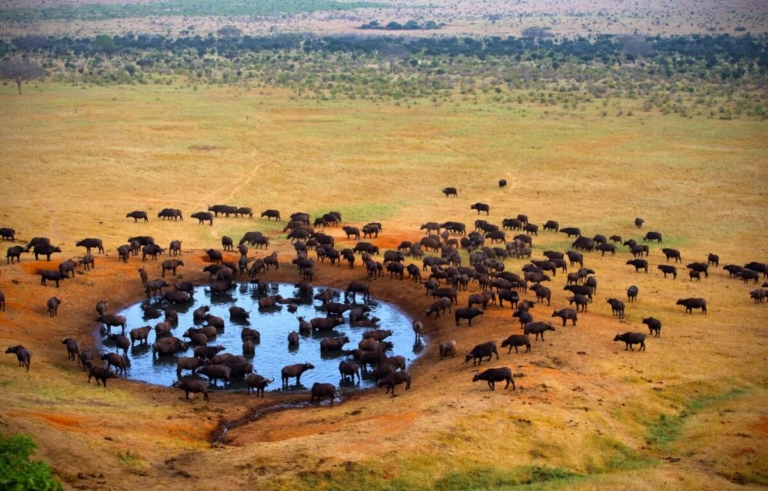
Lions, buffaloes, giraffes, zebras and numerous antelopes may also be encountered. Wildlife remains free-ranging, so each drive develops differently.
Families can return to camp between activities rather than remaining inside the vehicle all day. A relaxed schedule prevents younger travellers from becoming exhausted.
A shorter evening drive can then focus on wildlife activity as temperatures begin to fall.

-
DAY
7-8
Slower Family Exploration
By the seventh day, families have usually adjusted to the rhythm of safari life. This is an excellent time to reduce the pace rather than add increasingly demanding activities.
A short morning walk can focus on birds, insects or tracks. Another day might begin with a game drive and leave the afternoon free.
Children often appreciate time around camp, especially when accommodation provides suitable family spaces. Adults benefit from the pause as well.
The slower days also provide flexibility if an earlier walking activity was changed because of weather or wildlife conditions.
Ten days should provide room for adjustment rather than becoming ten consecutive days of tightly scheduled excursions.

-
DAY
9
Final Full Safari Day
The final full day offers an opportunity to revisit favourite habitats. By this point, families often have particular animals they hope to encounter again.
The guide can use knowledge gathered during previous days to shape the route. However, wildlife still determines what actually happens.
A morning drive may be followed by a final permitted walking activity if conditions and family interests align.
Photography often improves late in a safari because visitors have become more patient. Children also begin recognizing animals and behaviours without needing constant explanations.
The evening can remain relaxed, allowing everyone to enjoy their final night in the wilderness.

-
DAY
10
Fly Out of Tsavo
The final morning depends on the flight schedule. When time permits, families may enjoy a short activity before breakfast and departure.
Luggage should be prepared according to the airline's requirements. Parents should keep important travel documents and medication easily accessible.
The transfer to the airstrip can provide a final informal game drive. Wildlife often appears when travellers least expect it.
Flights then connect the family with the next stage of the journey, which may be Nairobi, the coast or another safari region.
Schedules should always be confirmed for the actual travel date.
What Walking Adds to the Safari
A vehicle allows families to cover enormous distances, but walking changes how they interpret the environment.
Tracks become more meaningful when examined from ground level. Children can see the difference between hoofprints and learn how guides recognize fresh animal signs.
Plants also receive more attention. A guide can explain which species animals eat and how vegetation changes with water availability.
Bird calls and insect sounds become easier to hear away from an engine.
These details help families understand that safari is about ecosystems rather than simply finding the largest possible animals.
Safety on Family Walking Safaris
Safety must remain central to every family walking safari in Tsavo East. Walking should take place only where authorized and under appropriate professional supervision.
Guides evaluate animal movements before choosing a route. A planned walk can be changed when elephants, buffaloes or predators are present nearby.
Children must be able to follow instructions consistently. Operators may apply minimum ages according to the type of walk and local regulations.
Parents should provide accurate information about children's ages before booking. Hiding a child's age to access an activity can create unnecessary risk.
Alternative vehicle activities can be arranged when walking is unsuitable.
Private Game Drives for Families
Private vehicles complement walking particularly well. They provide flexibility on days when children need a slower start or shorter afternoon.
A family can remain longer at an elephant sighting without negotiating with other guests. They can also return to camp when younger travellers become tired.
Experienced family guides explain wildlife in ways that remain interesting without becoming overly technical.
The vehicle also provides a safe platform for viewing animals that should never be approached on foot.
Combining private drives with controlled walking creates a much more balanced experience than relying entirely on either activity.
Choosing Family Accommodation
The right camp should provide more than attractive rooms. Families need suitable sleeping arrangements, convenient meal options and enough space to relax.
Parents should confirm whether rooms are connected or how children will be accommodated. Policies differ between properties.
The location also matters. A camp that requires lengthy transfers for every activity can make the safari tiring.
Families interested in walking should confirm whether the property can arrange appropriate guided activities. Marketing descriptions alone may not explain age restrictions or permitted walking areas.
Booking these details in advance prevents disappointment after arrival.
Photography with Children
Children often enjoy taking photographs when they have simple equipment. A small camera can encourage them to pay closer attention to wildlife.
Parents should avoid turning photography into a competition. A child's unusual photograph of elephant tracks may become more meaningful than a technically perfect lion portrait.
Binoculars are equally valuable. They encourage observation without requiring every sighting to be recorded.
During walks, camera equipment should remain light. Heavy bags can make children and adults uncomfortable.
Photography must never distract anyone from safety instructions. The guide's directions always take priority when travelling on foot.
Responsible Family Safari Travel
Tsavo's wildlife should be observed without feeding, calling or blocking animals. Parents can use these rules to teach children how responsible tourism works.
Walking groups should leave natural objects where they find them. Feathers, bones and plants remain part of the ecosystem.
Waste must return to camp for proper disposal. Even small plastic items can cause harm when left in wildlife areas.
Families can also learn how tourism supports conservation and employment. These discussions make the safari educational without turning it into a classroom.
Respectful behaviour allows children to develop a healthier relationship with wildlife.
Plan Your 10-Day Fly-In Tsavo Family Safari
A 10-day fly-in walking safari in Tsavo East National Park for families provides enough time to explore without rushing children through constant activities. Flights reduce long transfer times, while private vehicles create flexibility after arrival.
Guided walks can reveal tracks, plants, birds and smaller details that disappear during vehicle safaris. However, walking must always follow current park regulations, professional guidance and applicable age requirements.
Longer game drives provide safe access to elephants, lions and other major wildlife. Rest periods keep the journey comfortable across ten days.
With the right camp and experienced family guide, Tsavo East can provide an educational, exciting and well-paced family safari that feels much deeper than a quick wildlife visit.
Accommodation Options in Kigali


Ready to Experience This Classic Safari?
Let our expert team customise this 10-day itinerary to match your interests and travel dates.
