

Where to Stay in Lake Kivu for Family Gorilla Trekking
Plan Lake Kivu family gorilla trekking with advice on family stays, Rwanda gorilla permits, age rules, Volcanoes accommodation…
Read article →
Travel Guide
Plan How to See Leopard in Ngorongoro Crater for Photographers with practical advice on timing, costs, experiences, transport and responsible travel.
Planning how to see leopard in Ngorongoro Crater for photographers requires preparation for one of wildlife photography's most unpredictable subjects. The Ngorongoro Crater provides extraordinary scenery and substantial wildlife diversity, but leopards remain secretive predators whose appearance can never be guaranteed.
For photographers, the challenge is part of the attraction.
A leopard may remain hidden while other wildlife produces outstanding images throughout the day. Alternatively, a brief unexpected predator encounter can become one of the defining moments of the safari.
The strongest photography strategy is therefore to prepare for leopards while remaining visually open to the complete Ngorongoro ecosystem.
With Gecko Safaris Africa, photographers can arrange private transport, suitable equipment space and a broader northern Tanzania itinerary designed around patient wildlife observation.
Leopards combine beauty, secrecy and powerful behaviour.
Their patterned coats create compelling visual contrast against grass, woodland and other natural backgrounds.
They can produce intimate portraits, environmental compositions and behavioural photographs.
The difficulty of finding them also makes every encounter feel significant.
For serious wildlife photographers, the challenge is not merely recording a leopard but creating an image that communicates something about its behaviour or environment.
No wild leopard sighting can be guaranteed.
Photographers should be cautious about any itinerary promising otherwise.
Predators move according to their own ecological needs.
A leopard can remain concealed by vegetation or terrain.
Even highly experienced guides cannot control its movements.
Photography safaris should therefore be designed to maximize field opportunities without presenting probability as certainty.
The leopard's rosette pattern works remarkably well in natural environments.
Photographers often discover that an animal visible through binoculars becomes difficult to relocate through a camera viewfinder.
Branches and vegetation can break up the body shape.
This camouflage can be incorporated creatively.
Instead of seeing vegetation only as an obstruction, photographers can use it to communicate the animal's secretive character.
A dedicated predator search benefits from careful observation.
Guides may scan vegetation, shaded areas and other appropriate habitat.
Photographers should also watch for behavioural clues from other animals.
An alarmed prey species does not prove that a leopard is nearby, but it can justify closer attention.
The process of searching can itself become an important part of understanding predator ecology.
Early daylight can provide attractive photographic conditions.
Lower-angle light may create warmth and texture.
It can also be easier to expose than harsh midday light.
However, photographers should not assume that a leopard will appear only during ideal conditions.
Wildlife may present itself under difficult light, and the photographer must be prepared to respond.
Many photographers become less enthusiastic when the sun is high.
However, a leopard sighting should not be ignored because the light is imperfect.
Modern cameras provide considerable exposure flexibility.
Strong shadows can sometimes be used creatively.
The documentary value of unusual behaviour may also outweigh technically ideal lighting.
Wildlife photography requires adaptation rather than complete control.
A telephoto zoom is one of the most useful tools.
It provides flexibility when a leopard moves between different distances.
A second camera with a shorter lens can be valuable for wider environmental compositions.
Photographers should avoid carrying equipment that cannot be managed comfortably inside the vehicle.
The best lens is the one that can be used quickly when an unexpected encounter occurs.
Wildlife can move suddenly.
Photographers should keep camera settings reasonably prepared even while driving between sightings.
A shutter speed suitable for movement can help when a resting leopard suddenly stands or walks.
Autofocus settings should be familiar before the safari begins.
The crater is not the place to learn the basic controls of a new camera for the first time.
A tight headshot is not always the strongest photograph.
Including the surrounding landscape can communicate scale and habitat.
A partially concealed leopard can create visual tension.
Photographers should therefore vary compositions.
Wide, medium and tight frames can tell different parts of the story.
This variety becomes particularly valuable when producing a portfolio rather than a single social-media image.
The photographer should examine what appears behind the animal.
A slight change in vehicle position, where legal and safe, may simplify the background.
However, guides cannot always reposition the vehicle.
Wildlife welfare and park regulations come first.
Photographers should learn to work with available angles rather than demanding perfect positioning.
A private safari vehicle is highly valuable for serious photographers.
Equipment can be spread more efficiently.
The photographer can remain at a sighting longer without negotiating with unrelated passengers.
A private guide can also understand the photographer's preferred subjects and compositions.
The vehicle still remains subject to all applicable park rules and designated access.
A beanbag can provide practical support for longer lenses.
It is often easier to use inside a vehicle than a conventional tripod.
Photographers should discuss vehicle configuration before travelling.
The suitability of different supports depends on window and roof arrangements.
Preparing this in advance prevents wasted time once wildlife appears.
A photograph should never require disturbing the subject.
Drivers should not chase a leopard or block its route.
Photographers should not make noises to force the animal to look toward the camera.
Baiting wildlife is inappropriate.
The most valuable images document behaviour that occurred naturally.
Ethical practice is part of professional wildlife photography.
A predator sighting can attract attention.
Photographers should remain patient if other vehicles are present.
The guide should follow appropriate positioning practices.
Guests should avoid encouraging competitive driving.
A leopard surrounded by vehicles may become uncomfortable.
Maintaining responsible behaviour protects both the animal and the quality of the viewing experience.
Ngorongoro can provide opportunities to photograph other predators depending on natural conditions.
Photographers should remain ready even while searching for leopards.
A strong portfolio does not depend on one species.
Behaviour involving another predator may become the most compelling sequence of the trip.
The camera should therefore remain accessible throughout the game drive.
Large concentrations or groups of herbivores can produce excellent environmental images.
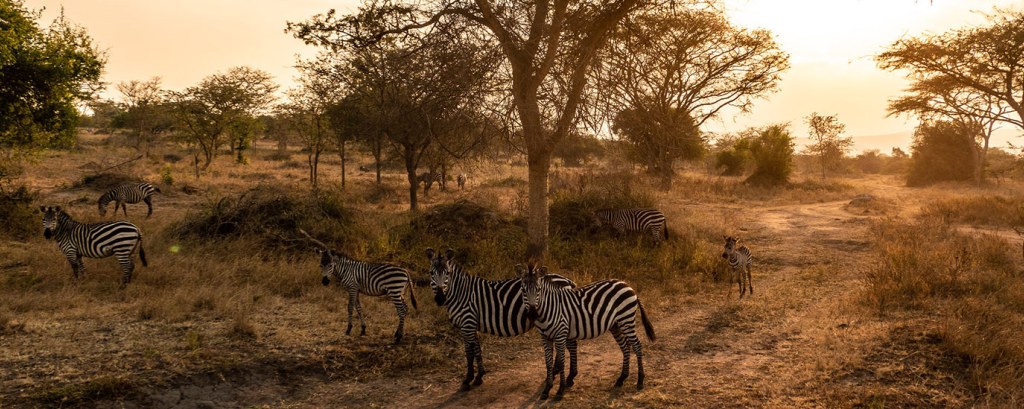
Zebras, wildebeest, buffaloes and antelopes can be photographed individually or as part of the crater landscape.
Photographers should look for interaction and movement.
Dust, weather and changing light can transform otherwise familiar subjects.
The complete ecosystem provides constant visual opportunities.
Aquatic habitats can introduce another photographic style.
Hippos may provide reflections, group behaviour and close studies of eyes and ears above water.
Birds around wetland environments can become secondary subjects.
This variety is useful when a leopard remains hidden.
A photographer who remains adaptable rarely has a completely unproductive safari day.
Birds should not be ignored.
Long lenses carried for leopards are also useful for bird photography.
Raptors, waterbirds and smaller species can produce excellent images.
A knowledgeable guide can identify subjects and anticipate behaviour.
Bird photography can also sharpen reaction speed because smaller subjects often move rapidly.
The crater landscape deserves dedicated attention.
Photographers should occasionally put down the long lens and use a wider focal length.
Atmospheric conditions can create dramatic scenes.
Wildlife shown within the crater environment can communicate a stronger sense of place than isolated portraits.
A diverse portfolio should contain both animals and landscapes.
Clouds are not necessarily bad news.
Overcast conditions can produce softer light for wildlife portraits.
Stormy skies may create dramatic landscapes.
Rain can change animal behaviour and add texture to photographs.
Photographers should protect equipment appropriately but remain visually open to changing conditions.
The strongest images often emerge from weather that initially appears inconvenient.
Different seasons create different visual characteristics.
Greener periods may provide rich backgrounds.
Drier landscapes produce another aesthetic.
Wildlife distribution also changes.
There is no single season that guarantees the best leopard photograph.
Photographers should choose dates according to the broader subjects and landscapes they want to document.
Photography benefits from repetition.
One crater visit can be productive, but photographers planning a broader Tanzania portfolio should allocate enough days across suitable northern destinations.
This creates multiple opportunities for predators and different lighting conditions.
Rushing from park to park reduces time available for patient behaviour photography.
A smaller number of well-selected locations can produce stronger work.
Photographers can combine Ngorongoro with Serengeti, Tarangire, Lake Manyara or other suitable destinations according to the route.
Each ecosystem creates different backgrounds and wildlife opportunities.
A leopard photographed in woodland looks very different from one photographed against a more open landscape.
This diversity can significantly strengthen a photographic portfolio.
Location should be considered alongside comfort.
A conveniently positioned property can reduce unnecessary transfer time.
Charging facilities are important for cameras, batteries and laptops.
Photographers should understand how electricity operates at remote properties.
If several devices need charging simultaneously, this should be considered during planning.
Photographers should establish a backup routine before travelling.
Images can be copied to additional storage at the end of each day where practical.
Memory cards should be stored securely.
A photograph does not truly exist safely when there is only one copy.
Consistent file organization also makes editing much easier after returning home.
Safari environments can be dusty.
Camera bags should remain closed when equipment is not in use.
Photographers should avoid unnecessary lens changes while the vehicle is moving.
A blower and suitable cleaning materials can help.
Sensor cleaning should be approached carefully.
Preventing dust is generally easier than correcting hundreds of affected photographs later.
Private vehicles, additional days and specialist arrangements can increase the price.
Photographers should decide which upgrades improve actual field opportunities.
More game-drive time may provide greater value than an expensive room upgrade.
A detailed quotation should identify accommodation, transportation, guiding and applicable conservation charges.
This allows photographers to allocate their budget strategically.
The journey can begin with a northern Tanzania arrival and preparation night.
Photographers can then continue toward Ngorongoro, dedicating substantial field time to predators, herbivores, birds and landscapes.
The itinerary can subsequently continue to another complementary safari destination.
Several nights in each important location allow changing light and wildlife behaviour to influence the portfolio naturally.
When contacting Gecko Safaris Africa, provide travel dates, number of photographers, camera equipment and preferred safari duration.
Mention leopard photography as a major objective.
State whether a private vehicle is required.
The itinerary can then prioritize field time, suitable vehicle arrangements and complementary destinations offering different photographic environments.
The key to how to see leopard in Ngorongoro Crater for photographers is preparation combined with patience.
A leopard encounter cannot be scheduled, but photographers can prepare the right equipment, use experienced private guiding and dedicate enough time to wildlife observation.
The strongest portfolio should also embrace Ngorongoro's predators, herbivores, birds, wetlands and crater landscapes rather than depending on one elusive cat.
With Gecko Safaris Africa, photographers can build a carefully paced Tanzania safari that provides the flexibility needed for serious wildlife photography while keeping ethical viewing and natural animal behaviour at the center of every encounter.
Leopards may be encountered, but sightings cannot be guaranteed.
A telephoto zoom provides useful flexibility, while a shorter lens can capture environmental wildlife and landscapes.
For serious photographers, private transport can provide valuable flexibility and equipment space.
Only where explicitly permitted and considered safe. Visitors must always follow guide instructions and applicable rules.
Ngorongoro provides numerous other photographic subjects, including predators, herbivores, birds, wetlands and dramatic landscapes.
Still Have Questions?
Talk to a safari specialistPlan Lake Kivu family gorilla trekking with advice on family stays, Rwanda gorilla permits, age rules, Volcanoes accommodation…
Read article →Plan a private Lake Ihema and tea plantation tour with Akagera lodges, private game drives, Nyungwe stays, tea…
Read article →Find where to stay near Lake Burera for gorilla photography, Virunga landscapes and convenient access to Rwanda's Volcanoes…
Read article →Plan a mid-range Lake Burera stay with Volcanoes National Park before continuing to Akagera for Rwanda Big Five…
Read article →