

Nshongi Gorilla Family in Bwindi
Nshongi Gorilla Family in Bwindi: History, Location and Trekking Guide The Nshongi Gorilla Family holds an important place…
Read article →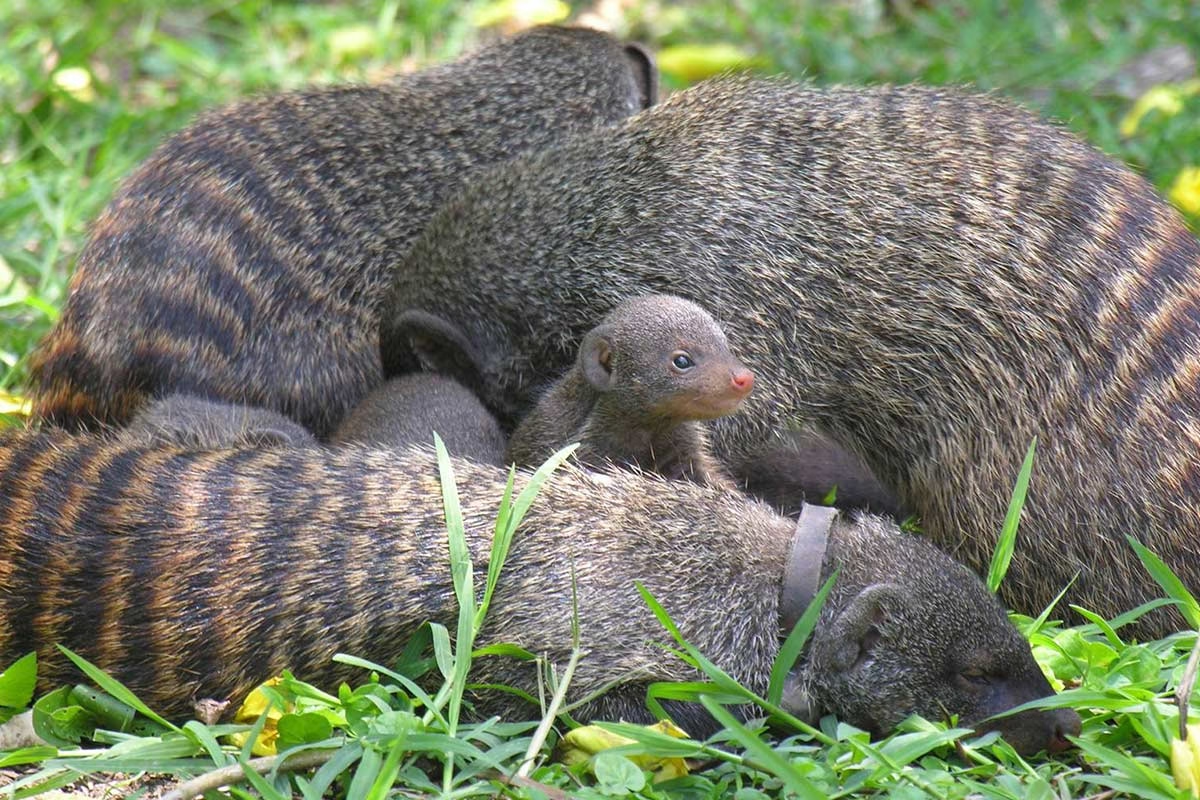
Travel Guide
Explore the fascinating world of banded mongoose tracking and filming. Learn tips for observing, photographing, and capturing these social animals in their natural habitat.
Banded mongoose tracking provides wildlife enthusiasts, photographers, and filmmakers with an opportunity to observe one of Africa's highly social small mammals. Banded mongooses may not have the size of elephants or the immediate fame of lions and gorillas, but their cooperative behavior can make them exceptionally interesting subjects when visitors take time to watch an entire group rather than concentrating on one individual.
The supplied source describes banded mongooses as social mammals occurring across sub-Saharan Africa. They live in organized groups, communicate frequently, forage together, use burrows, care for young, and respond collectively to their surroundings.
These characteristics make tracking and filming them particularly rewarding. The objective is not simply to locate a mongoose and take a photograph. A patient observer can document interactions between group members and build a more complete visual story about how the animals live.
The supplied source describes banded mongoose groups as mobs, often containing approximately 10 to 30 individuals.
A group creates many possible behaviors for a photographer to observe.
Some animals may forage while others remain alert. Young animals may stay close to adults. Individuals can groom one another or communicate as the group changes direction.
Instead of following only one mongoose through the camera, filmmakers can pay attention to the relationships connecting the whole group.
This social dimension is one of the strongest reasons to spend time tracking them.
The source emphasizes cooperation within mongoose groups and notes that individuals may perform different roles, including hunting and caring for younger animals.
This means that the most interesting footage may emerge from interaction rather than movement alone.
A mongoose running across open ground can produce an attractive image, but a sequence showing several group members coordinating their behavior can communicate much more about the species.
The photographer needs time to recognize these patterns.
According to the supplied source, banded mongooses are diurnal, meaning their main activity occurs during daylight.
Morning and late afternoon are particularly useful periods for observation.
During hotter parts of the day, the animals may rest in burrows or shaded locations.
Understanding this daily rhythm can improve tracking efficiency.
Rather than searching continuously during periods when the group may be inactive, observers can concentrate their effort around times when foraging and social interactions are more likely.
Tracking is not purely visual.
The supplied material explains that banded mongooses use vocalizations such as chatters, barks, and chirps.
These sounds can reveal a group's location even when grass or other vegetation makes the animals difficult to see.
Learning to listen therefore becomes an important tracking skill.
Once a sound is detected, observers can pause and determine its direction rather than immediately moving toward it and potentially startling the group.
The source also identifies scent marking and tail signals as elements of mongoose communication.
For filmmakers, understanding these signals can help anticipate movement.
An observer who recognizes that the group is coordinating or becoming alert can prepare the camera before the action develops.
This is much more effective than reacting only after the animals have already moved.
Wildlife filming often improves when the person behind the camera learns enough behavior to predict what may happen next.
The supplied source suggests searching around areas such as grasslands and termite mounds and looking for fresh signs of mongoose activity.
Tracking should combine several forms of evidence.
Footprints or movement through vegetation may provide visual clues, while calls can reveal direction.
Knowledge of local habitat helps narrow the search further.
An experienced guide can bring these clues together much more effectively than a visitor unfamiliar with the area.
Sudden movement can cause a mongoose group to scatter or change its natural behavior.
The source therefore emphasizes moving slowly.
This is especially important for photographers who become excited when the group finally appears.
Rushing forward for a closer image can immediately destroy the opportunity to observe normal behavior.
A slower approach, combined with a suitable lens, allows the animals to remain the focus without requiring intrusive proximity.
Keeping an appropriate distance is not merely a conservation principle; it can improve the footage.
When animals are not constantly responding to a human observer, they are more likely to continue feeding, grooming, caring for young, and communicating naturally.
Those behaviors produce a stronger wildlife story.
A close image of an alarmed mongoose may be technically sharp but biologically less meaningful than footage of a relaxed group interacting naturally.
The supplied source recommends a camera with a telephoto lens because mongooses move quickly and may remain at a distance.
A telephoto lens helps fill the frame without requiring the photographer to approach too closely.
The exact focal length depends on the setting and the photographer's equipment.
More important than carrying the largest possible lens is knowing how to operate the chosen camera quickly.
Mongooses rarely wait while a photographer searches through menus.
A tripod or monopod can provide useful stabilization, particularly during prolonged filming.
Video often reveals small camera movements that might be less noticeable in a single photograph.
Support equipment can therefore improve footage when the group remains in one area.
However, mobility also matters.
A very heavy setup may become inconvenient if the mongooses change direction repeatedly.
The best equipment choice balances stability with the need to reposition efficiently.
The source recommends binoculars or a spotting scope for locating a group before moving closer.
This is a valuable approach because observation can begin at a distance.
Instead of walking randomly through habitat, visitors can scan likely areas first.
Once the mongooses are found, the group can determine an appropriate observation position.
Binoculars are also useful when the animals move beyond practical camera range but remain behaviorally interesting.
A field notebook is another tool highlighted by the source.
Photographers can record group size, location, time, habitat, and interesting behaviors.
These notes become valuable when organizing images or constructing a film narrative later.
A photograph may show what happened, but notes can preserve context that the image alone does not explain.
For repeated visits, records may also reveal patterns in where and when the group is most active.
The supplied source recommends neutral-colored clothing that blends more naturally with the environment.
The objective is not to become invisible but to reduce unnecessary visual disturbance.
Clothing should also be practical for the habitat and weather.
Comfort matters because successful wildlife filming often involves remaining still for extended periods.
An uncomfortable photographer becomes more likely to move constantly, which can affect both the animals and the quality of filming.
The strongest mongoose footage comes from authentic behavior.
The source encourages photographers to concentrate on grooming, babysitting, hunting, and group interactions.
These sequences reveal more about the animals than isolated portrait shots.
A good wildlife film might begin with the group emerging, continue through foraging and social interaction, and then show the animals moving toward another part of their habitat.
This creates a behavioral story rather than a collection of disconnected clips.
The source suggests that longer recording periods can increase the chance of capturing spontaneous moments.
This does not mean filming without thought.
It means allowing behavior enough time to develop.
An interaction may begin slowly and then suddenly become visually interesting.
Stopping the camera too quickly can mean missing the most important moment.
Patience remains one of the most valuable pieces of wildlife filming equipment.
Observers should never block the animals' normal paths.
The source specifically warns against obstructing foraging routes or burrows.
A mongoose group should be able to move freely through its habitat.
If the animals repeatedly change direction because a photographer is standing in their path, the observer has become part of the behavior rather than simply documenting it.
Repositioning may be necessary to restore sufficient space.
Burrows are important locations for banded mongooses.
Visitors should avoid crowding entrances or positioning equipment in a way that interferes with access.
A burrow may appear to offer an easy opportunity to wait for animals, but the welfare of the group comes first.
Professional guidance is especially useful for determining an observation position that allows photography without blocking normal activity.
The source mentions time-lapse sequences as a possible way to show morning or evening activity.
This technique can communicate group movement and changing light differently from ordinary video.
A camera can be positioned at a respectful distance while the scene develops.
As with all wildlife filming, equipment placement should not alter animal movement.
The technical effect is worthwhile only when it can be achieved without disturbance.
Banded mongoose footage becomes stronger when the filmmaker thinks beyond individual shots.
Wide images can establish habitat.
Medium views can show several group members together.
Closer telephoto footage can reveal expressions, feeding, or grooming.
Behavioral sequences then connect these images.
This approach communicates the complexity emphasized by the supplied source and gives viewers a clearer understanding of mongoose social life.
Banded mongoose tracking encourages travelers to pay attention to smaller wildlife that can be overlooked during safaris dominated by large mammals.
The experience rewards careful listening, behavioral knowledge, patience, and respectful observation.
Mongooses demonstrate that fascinating wildlife stories do not require enormous animals or dramatic predator encounters.
Their group coordination, communication, foraging, care of young, and rapid movement can provide rich photographic material.
Successful Banded Mongoose Tracking and Filming depends on understanding the animals before trying to photograph them. Their group structure, daytime activity, vocalizations, scent communication, burrow use, and cooperative behavior all provide clues about where to look and what may happen next.
A telephoto lens, stable camera support, binoculars, field notes, and neutral clothing can help, but equipment alone does not create a strong wildlife experience.
Patience is more important.
By moving slowly, maintaining distance, avoiding burrows and foraging paths, and allowing the mongooses to behave naturally, photographers can create more authentic images while respecting the wildlife they came to document.

Nshongi Gorilla Family in Bwindi: History, Location and Trekking Guide The Nshongi Gorilla Family holds an important place…
Read article →
Mishaya Gorilla Family in Bwindi: History, Trekking and What to Know The Mishaya Gorilla Family is one of…
Read article →
Semuliki Hot Springs Visit Guide: What to Expect Semuliki Hot Springs offers one of the most unusual natural…
Read article →
Kidepo Valley Remote Safari Guide: What to Expect Kidepo Valley National Park offers one of Uganda's most remote…
Read article →