

Closest Airports to See Mountain Gorillas in Africa
Find out which airports are closest to mountain gorilla trekking parks in Uganda, Rwanda, and the DRC. Plan…
Read article →
Travel Guide
Explore Kigali Cultural Village, where Rwanda’s history, culture, and traditions come alive. Experience authentic dance, crafts, and local life.
Kigali Cultural Village offers visitors an opportunity to experience aspects of Rwanda's history, traditions, creativity, music, food, and community life while staying in the capital. According to the supplied source, the village functions as a cultural hub where traditional performances, handicrafts, local cuisine, workshops, and guided experiences introduce travelers to different elements of Rwandan heritage.
For visitors whose Rwanda itinerary is dominated by wildlife experiences, a cultural stop in Kigali can provide valuable contrast. Gorilla trekking, forest walks, and savannah safaris reveal the country's natural environments, while a cultural experience focuses attention on people, artistic traditions, food, music, and everyday creativity.
The source describes Kigali Cultural Village as more than a sightseeing attraction. It presents the experience as a living expression of Rwandan resilience, creativity, and community spirit.
Travelers sometimes pass through Kigali quickly on their way to national parks.
However, spending additional time in the capital can help provide cultural context for the rest of a Rwanda journey.
Kigali Cultural Village is presented in the supplied material as one place where visitors can learn about traditional customs while interacting with performers, craftspeople, guides, and other members of the community.
The experience combines observation with participation.
Visitors can watch performances, browse crafts, taste food, join workshops, and ask questions during guided cultural tours.
Traditional dance and music form one of the central experiences highlighted in the source.
Performances incorporate traditional drums, dance, and songs.
Rather than functioning only as entertainment, the source describes these performances as forms of storytelling.
Some may relate to Rwandan kings, while others reflect aspects of daily village life.
This makes it useful to understand the context of a performance instead of concentrating only on its visual energy.
Drumming contributes rhythm and atmosphere to traditional performances.
Visitors can listen to how musicians coordinate with dancers and singers.
The relationship between movement and percussion gives the performance its structure.
For travelers unfamiliar with Rwandan music, paying attention to these connections can create a more meaningful experience than simply recording a short video.
Movement can communicate history, identity, celebration, and social themes.
The supplied source specifically emphasizes the stories contained within performances.
A guided explanation can help visitors understand why particular movements, costumes, or songs are significant.
This is one reason the source recommends immersive participation rather than treating a cultural performance as a quick stop.
The source suggests attending performances in the late afternoon for cooler conditions and potentially more interactive sessions.
Travelers can therefore arrange other Kigali activities earlier in the day and reserve the later afternoon for cultural experiences.
The exact program may vary, so visitors should confirm what is taking place during their visit.
The supplied material encourages visitors to capture short videos or photographs while emphasizing the importance of requesting permission.
This is an important part of respectful cultural tourism.
A performance may be visually appealing, but the people involved should not automatically be treated as photographic subjects without consideration.
Asking first creates a more respectful interaction.
A second major attraction described by the source is the work of local artisans.
Visitors can see crafts including basket weaving, pottery, and beadwork.
These activities reveal the skill and time involved in creating handmade objects.
Watching an artisan work can make a finished product more meaningful because travelers understand part of the process behind it.
Traditional baskets are among the items specifically mentioned in the source.
Basket weaving requires careful preparation of materials and consistent technique.
Visitors interested in crafts can watch the process and learn how different forms are created.
A locally made basket can also provide a meaningful souvenir or gift connected directly with the cultural experience.
Pottery introduces visitors to another form of practical and artistic craftsmanship.
The process of shaping materials into useful or decorative objects demonstrates knowledge passed through practice.
Where demonstrations are available, travelers can observe how the artisan works rather than seeing only finished pieces displayed for sale.
The source also highlights beadwork.
Small individual materials can be combined into detailed decorative objects through patient handwork.
For art enthusiasts, watching this process can reveal the difference between handmade products and mass-produced souvenirs.
Purchasing directly from artisans can also connect tourism spending more closely with local producers.
One of the more interactive possibilities mentioned in the source is trying to create a piece yourself.
Participation changes the experience from passive observation to practical learning.
Visitors quickly discover that skills which look effortless when performed by an experienced artisan often require significant practice.
This can increase appreciation for the craftsmanship behind the finished product.
The supplied material encourages visitors to purchase handcrafted items.
It also refers to polite bargaining as part of the market experience.
The important principle is respectful interaction.
Travelers should remember that handmade products represent materials, time, knowledge, and labor.
The goal should be a fair exchange rather than obtaining an item at the lowest possible price.
Food provides another route into culture.
According to the source, visitors to Kigali Cultural Village can sample Rwandan dishes prepared using local ingredients.
The material specifically mentions brochettes, Ugali, plantains, and traditional banana beer.
Food lovers can therefore make cuisine part of the cultural visit instead of treating meals merely as breaks between activities.
Brochettes are one of the foods highlighted in the supplied material.
They provide an approachable introduction for travelers interested in local food.
Trying dishes in a cultural setting can also create opportunities to ask about ingredients, preparation, and how particular foods fit into everyday meals or celebrations.
Ugali and plantains are also mentioned in the source.
Sampling staple foods can often reveal more about everyday cuisine than concentrating only on elaborate restaurant dishes.
Visitors interested in culinary culture should pay attention to how foods are combined and served rather than judging each component separately.
The supplied source recommends tasting traditional Rwandan banana beer.
For interested adult visitors, this can form part of exploring local food and drink traditions.
Travelers should approach the experience in the same respectful way as other cultural activities, listening to explanations about how the drink is prepared and used within local settings.
A cooking demonstration can deepen the culinary experience.
Instead of simply eating a finished meal, visitors can learn about ingredients and preparation methods.
The source suggests using such demonstrations as a way to understand how traditional dishes are made and potentially recreate aspects of the meal later.
This can turn lunch or dinner into an educational activity.
Guided cultural tours are another important element described by the source.
A guide can explain Rwandan history, family structures, and community life.
This interpretation gives context to the performances, crafts, and food visitors encounter.
Without explanation, travelers may see interesting objects or activities without understanding their wider significance.
The supplied material recommends guided tours partly because of the storytelling experience.
Oral explanation can connect different parts of the visit.
A guide may explain how a craft was traditionally used, why a particular dance is performed, or how customs relate to community life.
Visitors can ask questions and explore topics that interest them most.
Interactive workshops may include drumming.
Participating allows visitors to experience the challenge of keeping rhythm within a group.
The objective is not to master the instrument in a short session.
Instead, the activity offers a practical introduction to the coordination required by experienced performers.
Dance workshops provide another form of participation.
Learning even a few movements can increase appreciation for the control and practice behind a full performance.
Travelers should participate respectfully and follow the instructions of the performers or teachers.
The experience is about cultural exchange rather than imitating a tradition without understanding it.
The source also mentions traditional craft workshops.
These may allow visitors to work directly with materials under the guidance of artisans.
Hands-on learning can be especially valuable for families, students, and travelers interested in art.
It also creates more direct interaction with the people preserving and practicing these skills.
The supplied source recommends combining Kigali Cultural Village with visits to local markets.
This can broaden the cultural experience.
A structured village or workshop introduces traditions through interpretation, while a market shows part of contemporary commercial life.
Together, they can give visitors a more varied perspective on Kigali.
Students are identified among the visitors who may particularly appreciate the cultural village.
Performances, demonstrations, and guided explanations can turn abstract ideas about heritage into practical experiences.
Taking notes and asking thoughtful questions can make the visit valuable for school or university learning.
The source also identifies researchers and cultural enthusiasts.
Visitors with deeper interests can focus on particular subjects such as crafts, music, food, community organization, or storytelling.
A guided visit provides a starting point, although serious research would naturally require broader sources beyond a tourism experience.
One of the strongest reasons to include cultural experiences in a Rwanda itinerary is their potential economic connection with local producers.
Purchasing crafts, joining workshops, and paying for cultural activities can support the people providing them.
This creates a different tourism relationship from simply observing something without contributing to the local economy.
The supplied source presents the village as evidence of Rwandan creativity.
That creativity appears through music, dance, craft production, cuisine, and storytelling.
Visitors should therefore avoid treating "culture" as something existing only in the past.
Traditional skills can remain active and meaningful while also adapting to contemporary life.
Community is another theme emphasized in the source.
Many cultural activities depend on collective participation.
Musicians perform together.
Dancers coordinate movement.
Artisans share skills.
Food is prepared and enjoyed socially.
Understanding this communal element can help visitors appreciate why a cultural village involves much more than viewing isolated artifacts.
The supplied source suggests visiting during cultural festivals for additional performances and celebrations.
Festival periods can provide a particularly lively experience.
Travelers interested in this possibility should check what events correspond with their dates rather than assuming a festival will occur during every visit.
The source recommends allowing approximately two to three hours to experience performances, workshops, and the artisan market.
Visitors who participate in several activities may need longer.
The important point is to avoid rushing.
Cultural experiences become more rewarding when travelers have time to speak with people, watch processes, and ask questions.
The supplied material lists the location as Kigali, Rwanda.
It gives opening hours of 9:00 AM to 6:00 PM daily and states that entrance charges vary for adults, children, and groups, with visitors advised to inquire locally.
Morning and late afternoon are suggested for cooler weather and active performances.
These practical details should be confirmed when organizing the actual visit.
The supplied source presents Kigali Cultural Village as a place where visitors can explore Rwandan heritage through performance, craftsmanship, food, workshops, and guided cultural experiences.
Traditional drums, dance, and songs introduce stories associated with Rwanda's history and daily life. Artisans demonstrate basket weaving, pottery, and beadwork, while visitors can purchase handmade products or try selected crafts themselves.
Food adds another dimension through dishes such as brochettes, Ugali, and plantains, alongside the banana beer experience mentioned in the source. Interactive drumming, dance, craft, and cooking sessions can turn the visit into active learning rather than passive sightseeing.
For travelers wanting to understand Rwanda beyond its landscapes and wildlife, Kigali Cultural Village provides an opportunity to spend time with the country's creative traditions while supporting local artisans and cultural activities.

Find out which airports are closest to mountain gorilla trekking parks in Uganda, Rwanda, and the DRC. Plan…
Read article →
Mubare Gorilla Family Bwindi’s Trailblazing Group. The Mubare Gorilla Family, located in the Buhoma sector of Bwindi Impenetrable…
Read article →
Gorilla Habituation Experience in Uganda and Rwanda: A Rare Adventure Into the Wild. The Gorilla Habituation Experience in…
Read article →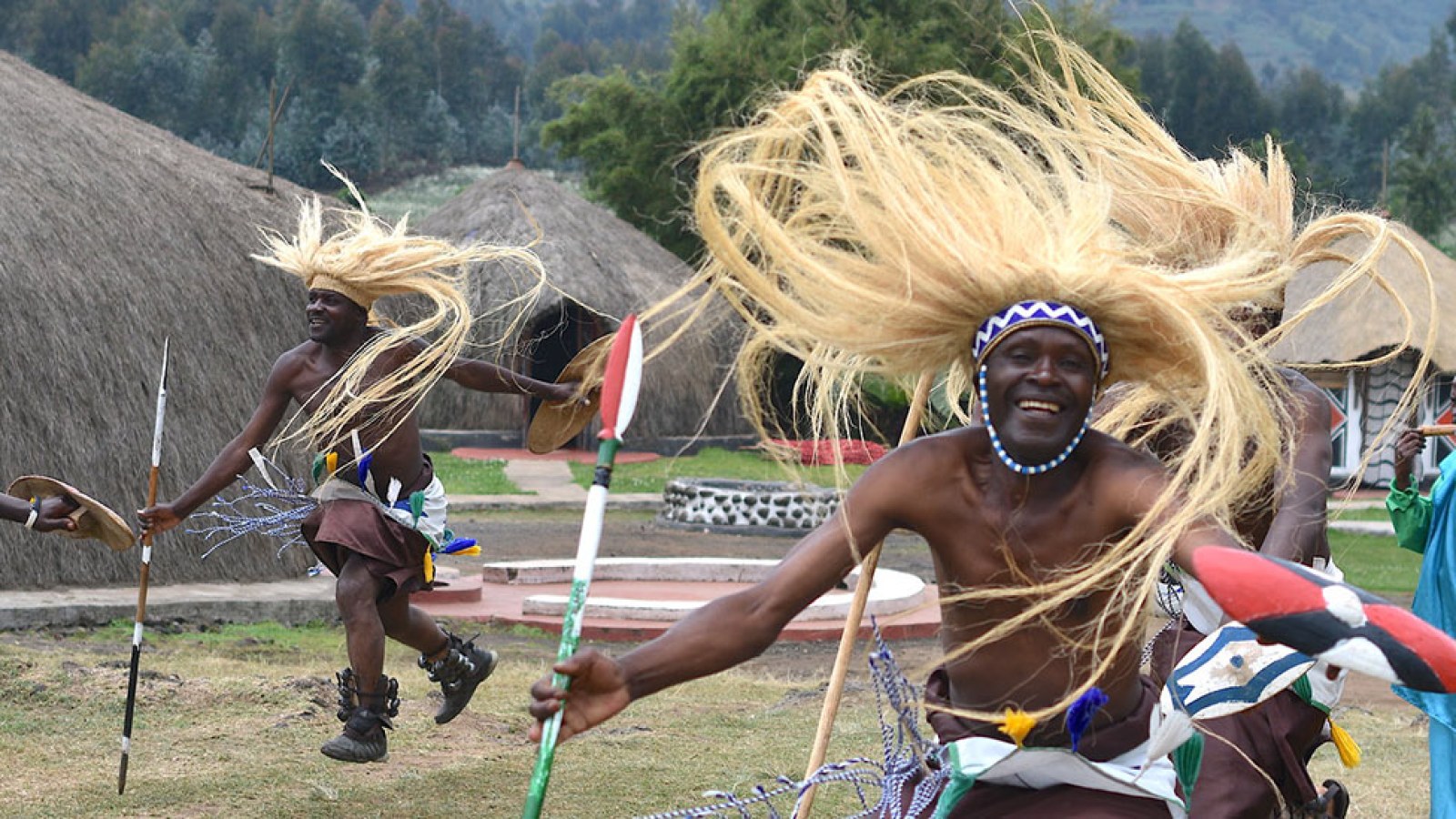
Rushaga Sector in Bwindi Impenetrable Forest Rushaga Sector in Bwindi Impenetrable Forest, Uganda, is one of the prime…
Read article →